In today’s fast-moving texting and chat culture, even old-school phrases still pop up in modern messages. One such phrase is “be there or be square.” You may see it in a text invite, a group chat, or even a meme—and if you don’t understand it, the joke (or invitation) might fly right past you.
Understanding phrases like be there or be square helps you:
- Catch social cues in texts
- Avoid awkward misunderstandings
- Sound more natural and confident in conversations
This guide is updated for 2025 and breaks down the be there or be square meaning in simple, human language—plus how people actually use it today.
What Does “Be There or Be Square” Mean? (Definition & Origin)
Simple Definition
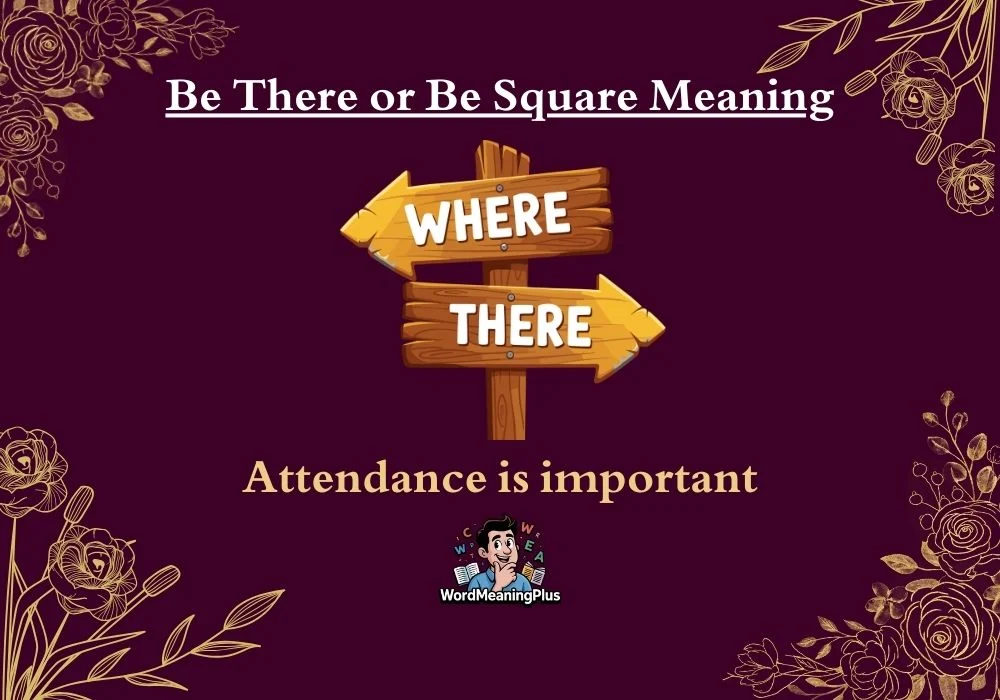
Be there or be square means:
You should come or attend, or you’ll miss out.
It’s a playful way to invite someone to an event while gently teasing them if they don’t show up.
In texting terms, it often implies:
- The event will be fun
- Attendance is important
- Not coming = being “uncool” or out of the loop
Why “Square”?
The word square has slang roots meaning:
- Old-fashioned
- Boring
- Not trendy
So when someone says “be there or be square,” they’re jokingly saying:
“Come join us—or be the boring one who didn’t.”
Origin of the Phrase
- Became popular in the 1950s–1960s
- Common in American teen slang
- Often used at parties, dances, or social hangouts
Even though it’s decades old, it’s still widely understood—and reused online for humor and nostalgia.
How to Use “Be There or Be Square” in Texts or Chat
When It’s Appropriate
This phrase is usually:
- Friendly
- Light-hearted
- Non-serious
You’ll often see it used when:
- Inviting friends out
- Planning casual events
- Joking around in group chats
Modern Texting Usage (2025 Style)
People today often use it:
- Ironically
- As a joke
- With emojis 😄
- In memes or captions
Examples of modern usage:
- “Movie night at my place 🍿 Be there or be square.”
- “Game starts at 8. Be there or be square 😂”
- “Group call tonight. Be there or be square 👀”
Platforms Where It’s Common
You’ll see be there or be square on:
- Instagram captions
- Snapchat
- Discord servers
- SMS / iMessage
- Facebook event invites
Examples of “Be There or Be Square” in Conversations
Example 1: Casual Text
Alex: “We’re meeting at the café at 6.”
Sam: “Cool!”
Alex: “Be there or be square 😜”
👉 Meaning: Please come—it’ll be fun.
Example 2: Group Chat
Group Admin:
“Game night tonight at 9 PM 🎮
Be there or be square.”
👉 Meaning: Don’t miss it if you want to be part of the fun.
Example 3: Social Media Caption
“Birthday party tonight 🎉
Be there or be square.”
👉 Meaning: Everyone’s invited—and expected.
Example 4: Funny/Ironic Use
Friend: “I’m staying home.”
You: “Wow… be there or be square, I guess 🤓”
👉 Meaning: Playful teasing.
Tone & Emotion Behind the Phrase
The phrase be there or be square is almost never rude. Instead, it feels:
- Friendly
- Playful
- Slightly teasing
However, tone matters. Adding emojis or casual wording keeps it light.
Safer versions:
- “Be there or be square 😂”
- “Be there or be square lol”
- “Be there or be square 😅”
Common Mistakes or Misunderstandings
Mistake 1: Taking It Literally
Some people think it’s an insult.
❌ Wrong interpretation:
“They’re calling me a square shape?”
✅ Correct meaning:
“It’s a joke meaning ‘don’t miss out.’”
Mistake 2: Using It in Serious Situations
Avoid using it:
- In professional emails
- With people who don’t understand slang
- In formal invitations
❌ Bad example:
“Team meeting tomorrow. Be there or be square.”
✅ Better option:
“Please attend the meeting tomorrow at 10 AM.”
Mistake 3: Using It With Strangers
It works best with:
- Friends
- Classmates
- Close coworkers
Using it with strangers may sound awkward or confusing.
Related Slangs or Abbreviations (Similar Meanings)
Here are some related slang phrases with a similar vibe:
1. Don’t Miss Out
- Straightforward
- No slang
- Neutral tone
2. Pull Up
Meaning: Come over / show up
Example:
“Party at my place—pull up!”
3. Show Up or Miss Out
A modern rewrite with the same idea.
4. You In or Out?
More direct, less playful.
5. FOMO (Fear of Missing Out)
Often implied by be there or be square.
Example:
“You’ll have serious FOMO if you don’t come.”
6. Squad Only
Implies exclusivity.
Why “Be There or Be Square” Still Works in 2025
Despite being old-school, the phrase survives because:
- It’s catchy
- It’s easy to understand
- It adds humor
- It feels nostalgic
In an era of short-form content and quick texts, phrases that feel fun and familiar still win.
How to Use “Be There or Be Square” Correctly (Quick Guide)
Do This ✅
- Use it with friends
- Add emojis for tone
- Keep it casual
- Use it as an invite
Avoid This ❌
- Formal messages
- Professional settings
- Serious conversations
SEO Tip for Content Creators
If you’re writing captions or blog posts:
- Use be there or be square meaning naturally
- Pair it with modern slang
- Add emojis for engagement
- Keep the tone playful
Internal linking ideas:
- What Does “FOMO” Mean in Texting?
- Old School Slang That’s Trending Again
- Popular Text Abbreviations Explained
Frequently Asked Questions (Quick Answers)
Is “be there or be square” rude?
No. It’s playful, not offensive.
Is it still used today?
Yes—especially in casual chats and jokes.
Can I use it on social media?
Absolutely. It works well in captions and stories.
Conclusion: The Real Meaning of “Be There or Be Square”
To sum it up, be there or be square means “come join us or miss out.” It’s a friendly, joking way to invite someone and make the event sound fun and important.
Even in 2025, this classic phrase continues to thrive in texts, group chats, and social media because it’s light, memorable, and expressive. When used correctly, it adds personality to your messages and keeps conversations engaging.