If you’ve ever seen someone say “I said it under duress” in a chat, DM, or comment section and thought, “Wait… what does duress mean here?”, you’re not alone.
In today’s fast-moving texting culture, words that once belonged only to legal or formal English are now popping up in group chats, memes, tweets, and even TikTok captions. One such word is duress.
Understanding the duress meaning in text is important because it changes how you interpret someone’s message. Sometimes it’s serious. Sometimes it’s sarcastic. And sometimes it’s just plain funny.
This guide is fully updated for 2026, written in simple, human language, and designed to help you actually use the word correctly—not just define it.
What Does “Duress” Mean? (Definition & Origin)
Simple Definition of Duress
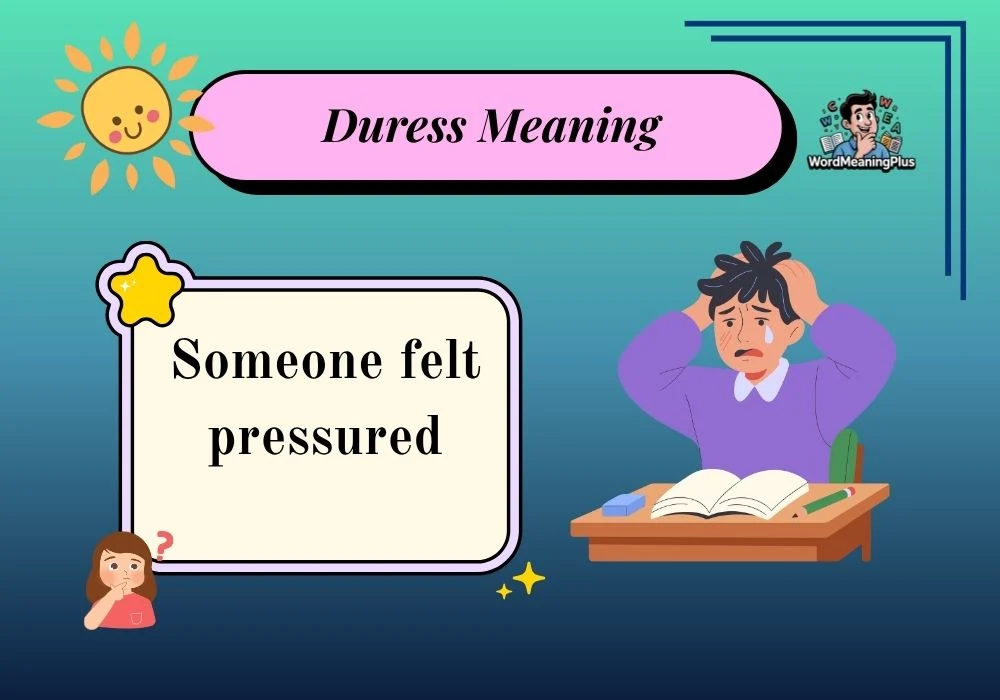
Duress means being forced to do something against your will, usually because of pressure, threats, fear, or stress.
In texting and online chat, it often means:
- Someone felt pressured
- Someone didn’t really want to agree
- Someone was emotionally, socially, or mentally forced
In short:
Duress = “I didn’t really want to do this.”
Duress Meaning in Text & Chat (Modern Usage)
In modern texting language, duress is often used:
- Seriously → to explain forced decisions
- Casually → to exaggerate pressure
- Jokingly → to be dramatic or sarcastic
📱 Example:
“I said yes under duress 😭”
This doesn’t always mean a serious threat. Most of the time, it means:
“I felt pressured, so I gave in.”
Where Does the Word “Duress” Come From?
The word duress comes from:
- Old French: duresse (hardship, pressure)
- Latin: durus (hard or harsh)
Traditionally, it’s a legal term, used in contracts or court cases.
But in 2025, it’s fully part of internet language too.
How to Use “Duress” in Texts or Chat
When Is It Appropriate to Use “Duress”?
You can use duress in texting when:
- You agreed to something you didn’t want
- You felt peer pressure
- You were emotionally pushed
- You want to sound dramatic (on purpose 😅)
Common platforms where it’s used:
- Instagram DMs
- Twitter/X
- Discord
- TikTok comments
Correct Sentence Structures
Here are natural ways to use duress in text:
- “I agreed under duress.”
- “That apology was under duress.”
- “I only came because of duress.”
- “This decision was made under extreme duress.”
💡 Pro tip:
“Under duress” is the most common and correct phrase.
Casual vs Serious Tone
Serious tone:
“He signed the document under duress.”
Casual / texting tone:
“I watched that movie under duress 💀”
Same word. Very different vibe.
Examples of “Duress” in Real Conversations
Example 1: Friends Chat (Casual)
Alex: Did you eat pineapple pizza?
Sam: Yes… under duress 😐
👉 Meaning: Sam didn’t want to, but gave in.
Example 2: Social Media Caption (Funny)
“Posted this selfie under duress 😭📸”
👉 Meaning: Someone forced or pressured them to post.
Example 3: Relationship Text (Semi-Serious)
“I apologized under duress, not because I was wrong.”
👉 Meaning: The apology wasn’t genuine.
Example 4: Workplace Chat (Professional)
“I accepted the deadline under duress due to management pressure.”
👉 Meaning: This is more formal and serious.
Example 5: Meme-Style Usage (2026 Trend)
“Me agreeing to plans under duress knowing I’ll cancel later.”
👉 Very popular sarcastic use in memes.
Common Mistakes or Misunderstandings
Even though duress is trendy, people still misuse it. Let’s fix that.
❌ Mistake 1: Using Duress for Physical Tiredness
Wrong:
“I’m under duress because I’m sleepy.”
Correct:
“I’m exhausted.”
👉 Duress is about pressure, not tiredness.
❌ Mistake 2: Confusing Duress with Stress
Stress ≠ Duress
- Stress = feeling overwhelmed
- Duress = being forced or pressured
Correct usage:
“I was stressed, but not under duress.”
❌ Mistake 3: Overusing It for Everything
Using duress for small things can sound dramatic (which may be fine if you’re joking).
But in serious conversations, overuse reduces clarity.
Related Slangs & Abbreviations (Similar Meanings)
If you’re learning the duress meaning in text, you’ll also see these related slang terms:
1. Pressured
- “I felt pressured to say yes.”
2. Forced
- “I was basically forced.”
3. Lowkey Forced
- Casual Gen Z phrasing
- “I was lowkey forced into it.”
4. Guilt-Tripped
- Emotional pressure
- “They guilt-tripped me into coming.”
5. Coerced (More Formal)
- Similar to duress but stronger
- Often used in serious contexts
Slang vs Duress (Quick Comparison)
| Term | Tone | Usage |
|---|---|---|
| Duress | Formal / Dramatic | Texts, jokes, serious |
| Forced | Neutral | Everyday chat |
| Pressured | Casual | Friendly chats |
| Coerced | Legal / Serious | Formal writing |
| Guilt-tripped | Emotional | Relationships |
How to Use “Duress” Correctly (Practical Guide)
Before using duress in text, ask yourself:
✔ Was I pressured?
✔ Did I feel forced?
✔ Am I being serious or sarcastic?
If yes → duress works perfectly.
Best Practices for 2025 Texting
- Use emojis to soften tone 😭😅
- Use sarcasm intentionally
- Avoid using it in sensitive situations unless accurate
Why “Duress” Is Trending in 2026
The word duress is popular in 2026 because:
- People love dramatic honesty
- Meme culture exaggerates pressure
- Therapy & mental health talk is mainstream
- Legal and formal words are being “internet-ified”
Short version:
Duress sounds smart, dramatic, and relatable.
Internal Linking Suggestions (Optional for SEO)
If you’re publishing this on a slang or texting blog, link to:
- “What Does ‘Lowkey’ Mean in Text?”
- “Meaning of ‘IMO’ in Chat”
- “Gaslighting Meaning in Text”
- “Passive Aggressive Texting Examples”
This improves topical authority and SEO strength.
Final Thoughts on Duress Meaning in Text
To sum it up, the duress meaning in text goes far beyond a dictionary definition. In modern chat culture, it’s a flexible word that can be serious, funny, sarcastic, or dramatic—depending on how you use it.
Whether you’re explaining a forced decision, joking about social pressure, or making a meme-worthy caption, duress helps express something many people feel but don’t always know how to say.
Just remember:
Use it when pressure is involved—real or exaggerated.
This guide is updated for 2026, reflecting how real people actually talk online—not how textbooks expect them to.