If you’ve ever received a message that says “FYSA” and paused for a second like, “Wait… what?”—you’re not alone. Texting and online chats move fast, and new abbreviations pop up all the time. Understanding FYSA meaning in text is important because one small acronym can completely change the tone of a message.
In work chats, group texts, emails, or even social media DMs, FYSA can sound polite, serious, or even passive-aggressive depending on how it’s used. This guide breaks it all down in simple English, with real examples you’ll actually see online.
👉 Updated for 2026, this article explains everything you need to know about FYSA so you never misunderstand it—or misuse it—again.
What Does FYSA Mean?
FYSA Meaning in Text
FYSA stands for “For Your Situational Awareness.”
In simple terms, it means:
“I’m telling you this so you’re aware.”
People use FYSA when they want to share information that may be important later, even if no action is required right now.
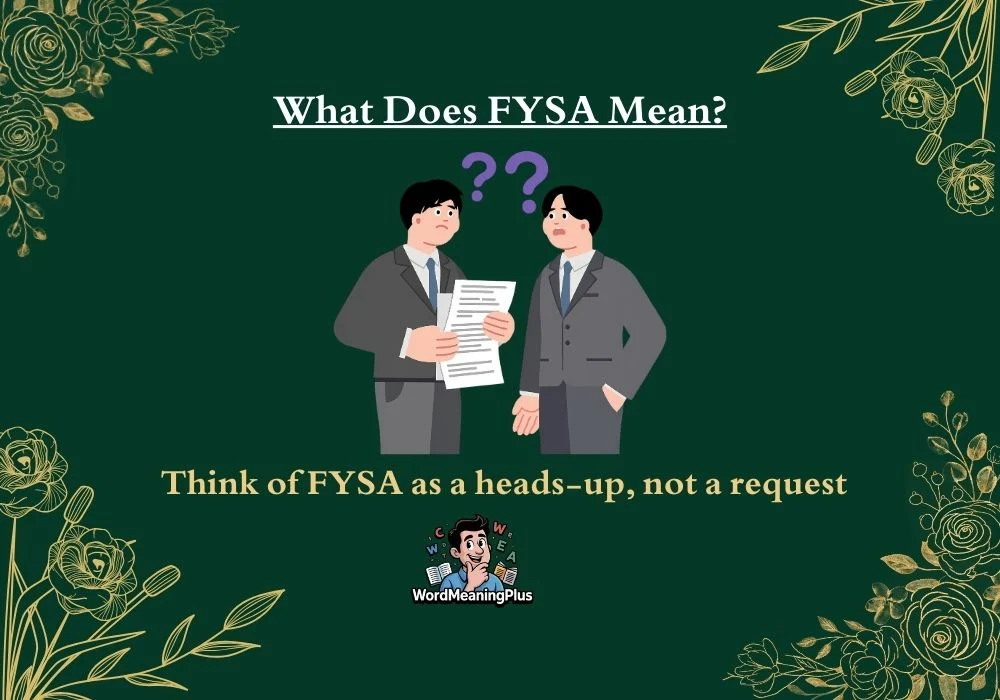
📌 Think of FYSA as a heads-up, not a request.
The Origin of FYSA
The phrase “situational awareness” comes from military and emergency services language. It refers to understanding what’s happening around you so you can react properly if needed.
Over time, professionals—especially in corporate, tech, and government jobs—shortened it to FYSA. Eventually, it made its way into:
- Workplace chat apps (Slack, Teams)
- Emails
- Text messages
- Online forums
- Professional social media
By 2026, FYSA is widely recognized, especially in work-related communication.
How to Use FYSA in Texts or Chat
When FYSA Is Commonly Used
You’ll usually see FYSA when someone is sharing information that might affect you later.
Common situations include:
- Work updates
- Schedule changes
- Policy reminders
- Tech issues
- Group announcements
🧠 Key idea: FYSA = No action needed right now, just be aware.
FYSA Tone: Neutral, Polite, or Passive-Aggressive?
This is where people get confused.
FYSA itself is neutral, but tone depends on context.
- ✅ Helpful: Sharing useful info
- ⚠️ Slightly passive-aggressive: Reminding someone of something they already should know
- ❌ Not friendly slang: Rarely used in casual chats with friends
Examples of FYSA in Conversations
FYSA in Work Chats
Example 1:
FYSA, the meeting has been moved to 3 PM tomorrow.
Example 2:
FYSA: the client requested changes to the final draft.
Example 3:
Just FYSA, the system may be down tonight for maintenance.
✔️ No action required—just awareness.
FYSA in Text Messages
Example:
FYSA, traffic is really bad on Main Street right now.
This usage is less formal but still informational.
FYSA in Emails
Example:
FYSA, the company policy has been updated as of January 2026.
Emails are one of the most common places you’ll see FYSA.
FYSA on Social Media or Forums
Example:
FYSA: This app update drains battery faster on older phones.
Here, FYSA works as a public heads-up.
How FYSA Is Different From Similar Phrases
People often confuse FYSA with other abbreviations. Let’s clear that up.
FYSA vs. FYI
- FYI = For Your Information
- FYSA = For Your Situational Awareness
📝 Difference:
FYSA implies the info may affect future decisions, not just general knowledge.
FYSA vs. Heads-Up
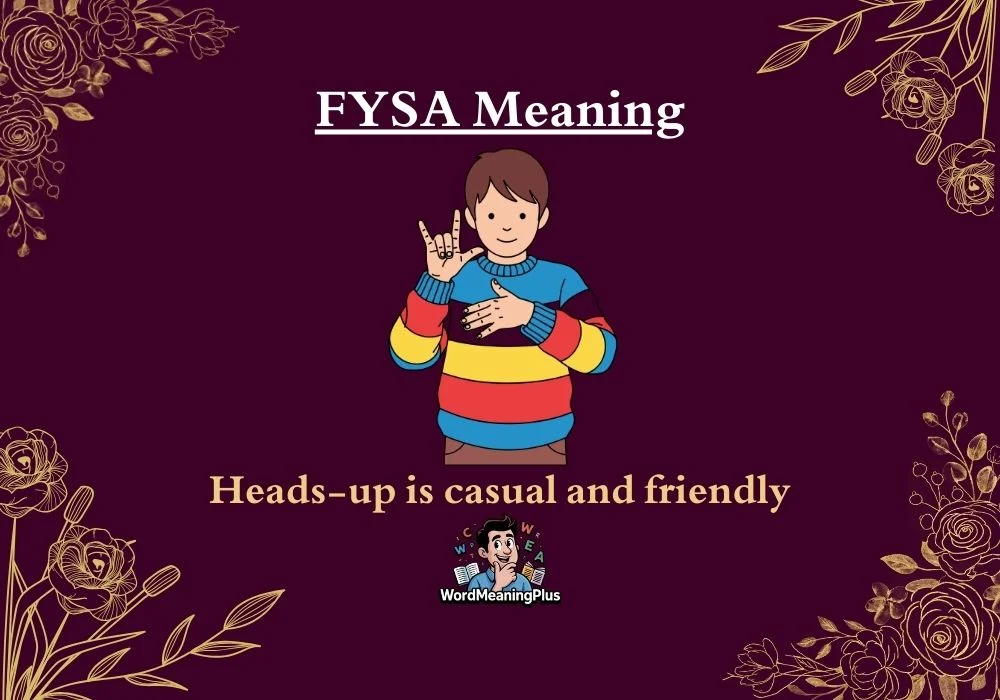
- Heads-up is casual and friendly
- FYSA sounds more professional and formal
FYSA vs. Note This
“Note this” can feel like a command.
FYSA is softer—more informational than directive.
Common Mistakes or Misunderstandings
1. Thinking FYSA Means “Do This Now”
❌ Wrong.
FYSA does not mean immediate action is required.
2. Using FYSA in Casual Friend Chats
Sending this to friends can sound weird or overly serious.
❌ “FYSA, I’m getting pizza.”
✔️ “FYI, I’m getting pizza.”
3. Using FYSA as a Threat or Warning
FYSA should inform, not intimidate.
❌ “FYSA, you were late again.”
✔️ “FYSA, attendance is being monitored.”
4. Overusing FYSA at Work
Too much FYSA can feel robotic or passive-aggressive.
Use it only when the information truly matters.
How to Use FYSA Correctly (Best Practices)
Follow these simple rules:
- ✅ Use FYSA for important awareness
- ✅ Keep the message short and clear
- ✅ Use it in professional or semi-formal contexts
- ❌ Avoid sarcasm
- ❌ Don’t use it for casual chit-chat
Related Slangs and Abbreviations
If you’re learning FYSA meaning, these related terms are worth knowing:
- FYI – For Your Information
- ASAP – As Soon As Possible
- IMO / IMHO – In My (Honest) Opinion
- TL;DR – Too Long; Didn’t Read
- NRN – No Reply Necessary
- ETA – Estimated Time of Arrival
💡 Internal linking tip:
You can link this article to guides like “FYI Meaning in Text” or “ASAP Meaning at Work” to boost SEO.
Is FYSA Rude?
Short answer: No—but it can feel that way.
FYSA is not rude by definition. However, it may sound cold or passive-aggressive if:
- Used repeatedly
- Used to point out mistakes
- Used without explanation
✨ Pro tip: Add a friendly sentence after FYSA to soften the tone.
Example:
FYSA, the deadline changed. Let me know if you need help.
Why FYSA Is Still Relevant in 2025
Even with emojis, voice notes, and AI tools, clear communication still matters.
FYSA remains popular because:
- It saves time
- It sounds professional
- It sets expectations
- It avoids confusion
In remote work and global teams, FYSA helps keep everyone informed without pressure.
Quick FYSA Meaning Summary
- FYSA = For Your Situational Awareness
- Used to share important awareness info
- Common in work, emails, and professional chats
- Not usually casual or playful
- Tone depends on context
Final Thoughts on FYSA Meaning in Text
Understanding FYSA meaning in text helps you read between the lines in modern communication. Whether it’s a Slack message, email, or group chat, FYSA tells you: “This matters—maybe not now, but soon.”
Used correctly, FYSA is helpful, professional, and efficient. Used poorly, it can sound stiff or passive-aggressive. Context is everything.