If you’ve ever seen the phrase “nolo contendere” pop up in a text, meme, comment section, or even a courtroom drama and thought, “Wait… what does that even mean?” — you’re not alone.
Understanding the nolo contendere meaning matters more than you might think. While it started as a serious legal term, it has slowly found its way into modern conversations, online debates, and even sarcastic internet humor. Knowing what it means can help you avoid confusion, embarrassment, or misusing it in the wrong context.
This guide breaks it all down in simple, human language, with real-life examples and modern usage. No law degree needed.
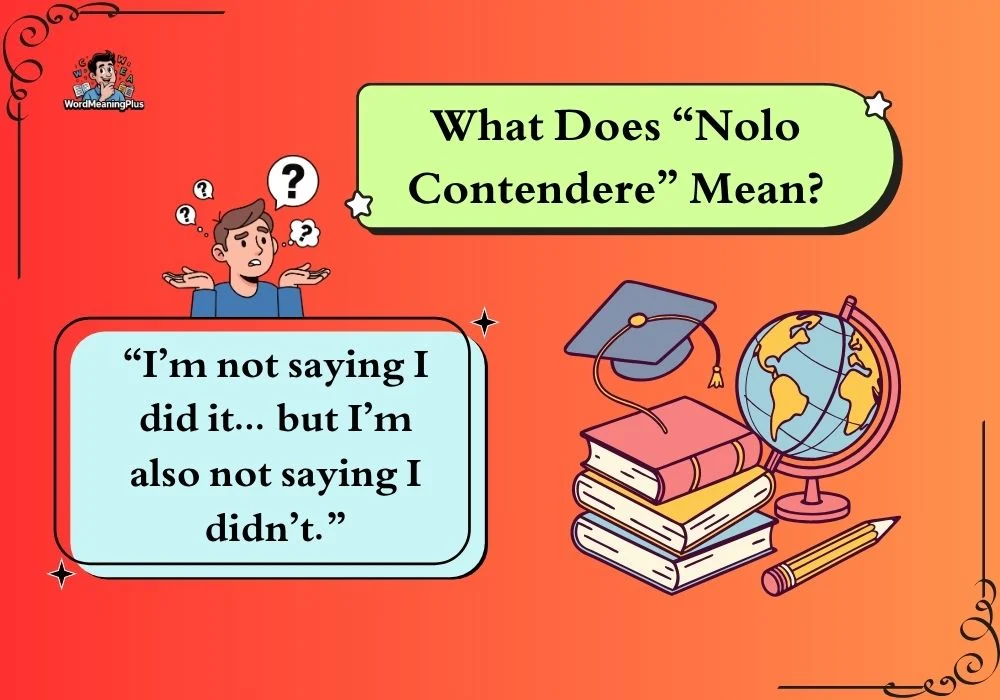
What Does “Nolo Contendere” Mean?
Simple Definition of Nolo Contendere
Nolo contendere is a Latin phrase that means:
“I do not wish to contend”
or more casually,
“I’m not admitting guilt, but I’m not fighting it either.”
In plain English, it’s a way of saying:
“I’m not saying I did it… but I’m also not saying I didn’t.”
That’s why it often feels confusing at first.
Where Does “Nolo Contendere” Come From?
The phrase comes from Latin, and it has been used for hundreds of years in legal systems.
- “Nolo” = I do not want
- “Contendere” = to fight or dispute
Originally, it was created for court cases, not texting or chatting.
Legal Meaning vs. Modern Meaning
Here’s where things get interesting 👇
| Context | Meaning |
|---|---|
| Legal / Court | Defendant accepts punishment without admitting guilt |
| Casual / Chat | “I won’t argue,” “I plead the fifth,” or “Let’s move on” |
| Online Humor | Sarcastic way to avoid blame |
So yes — the nolo contendere meaning changes depending on context.
How to Use “Nolo Contendere” in Texts or Chat
Let’s be real: most people don’t use “nolo contendere” in daily texting. It’s a bit fancy. But when it is used, it’s usually:
- Joking
- Sarcastic
- Mock-serious
- Debate-ending
Common Situations Where It’s Used
You’ll mostly see nolo contendere in:
- Online debates (Reddit, X, forums)
- Comment sections
- Group chats with educated or sarcastic friends
- Legal memes
- Political or argument-heavy discussions
What People Really Mean When They Say It
In chat language, nolo contendere usually implies:
- “I’m done arguing.”
- “I won’t admit fault, but whatever.”
- “Let’s drop this.”
- “I refuse to engage further.”
It’s often a smart-sounding exit line.
Examples of “Nolo Contendere” in Conversations
Example 1: Friendly Argument
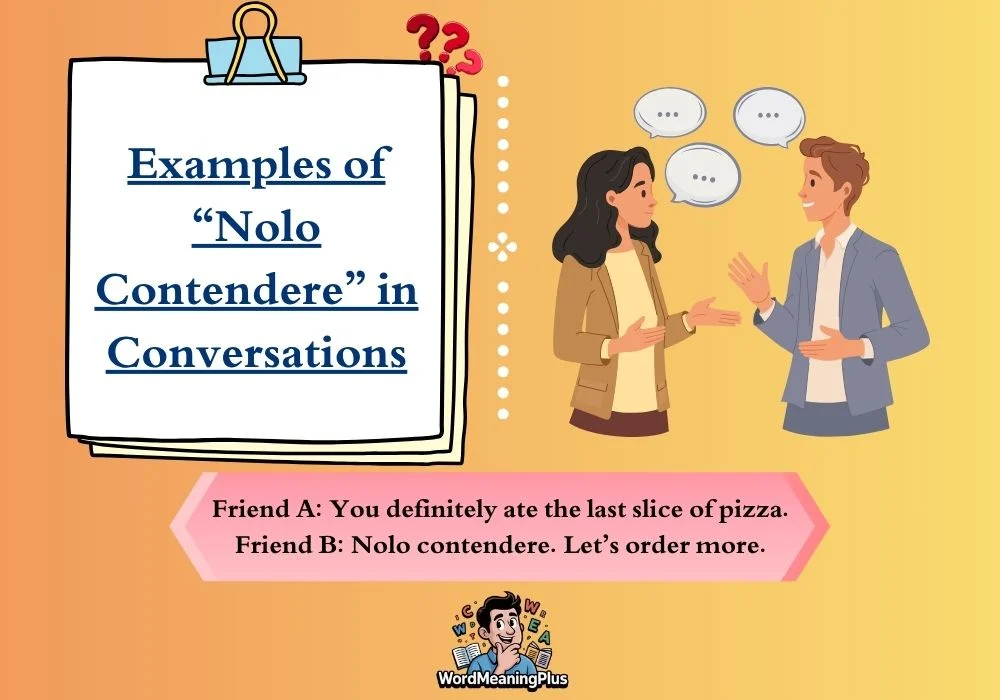
Friend A: You definitely ate the last slice of pizza.
Friend B: Nolo contendere. Let’s order more.
👉 Meaning: I’m not admitting it, but I’m not denying it either.
Example 2: Online Debate
User 1: You clearly misunderstood the article.
User 2: Nolo contendere. This thread is exhausting.
👉 Meaning: I’m not continuing this argument.
Example 3: Sarcastic Humor
Text:
“Did you forget my birthday?”
“👀 Nolo contendere.”
👉 Meaning: Yes… but I refuse to confess.
Example 4: Legal Meme Culture
Meme Text:
“When the evidence is overwhelming but you still want peace”
Caption: Nolo contendere.
👉 Meaning: Accepting consequences without admitting guilt.
Nolo Contendere in Law:
Even though this article focuses on chat and modern use, you can’t fully understand the nolo contendere meaning without the legal side.
What Is a Nolo Contendere Plea?
In court, nolo contendere (also called a no contest plea) means:
- The defendant does not admit guilt
- The court treats it like a guilty plea
- The defendant accepts punishment
- The plea can’t always be used as an admission in other cases
Why People Choose It
People may plead nolo contendere because:
- They want to avoid a long trial
- They don’t want to admit guilt publicly
- They want to reduce legal risk in civil lawsuits
- They just want the issue to end
Is It the Same as Guilty?
No — but also yes (kind of).
- Legally punished like guilty ✅
- Public admission of guilt ❌
That gray area is what makes the phrase so powerful — and why it works so well in modern slang.
Common Mistakes or Misunderstandings
Mistake #1: Thinking It Means “Innocent”
❌ Wrong.
Nolo contendere does NOT mean innocent.
It simply means “I’m not contesting this.”
Mistake #2: Using It in Serious Apologies
Saying “nolo contendere” during a real apology can sound:
- Arrogant
- Avoidant
- Emotionally distant
❌ Bad example:
“I hurt your feelings? Nolo contendere.”
That won’t end well.
Mistake #3: Assuming Everyone Understands It
This is a high-level phrase. Many people don’t know what it means.
👉 Use it only if:
- The audience is educated
- The tone is playful or sarcastic
- You’re okay explaining it
Related Slangs or Abbreviations Similar to “Nolo Contendere”
If you like the vibe of this phrase, here are modern alternatives that express similar ideas:
Casual Alternatives
- “Whatever.”
- “I plead the fifth.”
- “No comment.”
- “Let’s move on.”
Slang & Internet Equivalents
- IDC – I don’t care
- IDK – I don’t know
- SMH – Shaking my head
- ¯\(ツ)/¯ – Shrug emoji meaning “meh”
- “Agree to disagree”
Legal-Style Internet Humor
- “Allegedly”
- “According to my lawyer…”
- “For legal reasons, that’s a joke”
- “No further statements at this time”
These phrases work similarly in tone and intent.
How to Use “Nolo Contendere” Correctly:
Use It When:
✅ Ending an argument
✅ Making a sarcastic joke
✅ Avoiding blame playfully
✅ Referencing legal culture
Avoid It When:
❌ Apologizing sincerely
❌ Talking to kids
❌ Writing emotional messages
❌ Speaking to people unfamiliar with legal terms
Is “Nolo Contendere” Still Relevant in 2026?
Yes — but in a niche way.
In 2026, it’s most commonly seen in:
- Legal TikTok & YouTube
- Meme culture
- Reddit debates
- Political commentary
- Educated or sarcastic group chats
It’s not mainstream slang, but it’s timeless — and that’s why it still pops up.
SEO Notes & Internal Linking Ideas
If you’re publishing this on a slang or meaning-based site, consider linking internally to:
- “I Plead the Fifth Meaning”
- “Allegedly Meaning in Text”
- “No Comment Meaning in Chat”
- “Legal Slang Used Online”
Final Thoughts:
To sum it up, the nolo contendere meaning depends heavily on context. In law, it’s a strategic plea. In chat, it’s a clever way to say “I’m done arguing” without fully admitting fault.
It’s smart.
It’s sarcastic.
And when used correctly, it’s actually kind of funny.
Understanding phrases like this helps you sound more confident, informed, and culturally aware — especially in modern online conversations.

John Hudson is a passionate writer and language enthusiast who loves exploring the meanings of words, modern slang, and internet abbreviations. As the author of WordMeaningPlus.com, John Hudson’s goal is to help readers understand the true meaning of words, phrases, and texting slang in simple and easy English.
With a strong interest in language, communication, and online trends, John Hudson writes informative articles that explain word meanings, chat abbreviations, and social media slang in a way that is clear, helpful, and easy to understand. The main mission of WordMeaningPlus.com is to make language learning simple for everyone, especially students, bloggers, and internet users who want quick and accurate meanings.