If you’ve ever received a strange phone call claiming to be from your bank, a delivery service, or even “tech support,” you may have been targeted by vishing.
Understanding the vishing meaning is more important than ever in today’s texting, calling, and online chat culture—where scams don’t just live in emails anymore.
Vishing is one of those modern internet terms that sounds harmless but can cause serious damage if you don’t know what it means.
In this guide, we’ll break it down in simple, human language, with real-life examples, texting scenarios, and tips you can actually use.
What Does “Vishing” Mean?
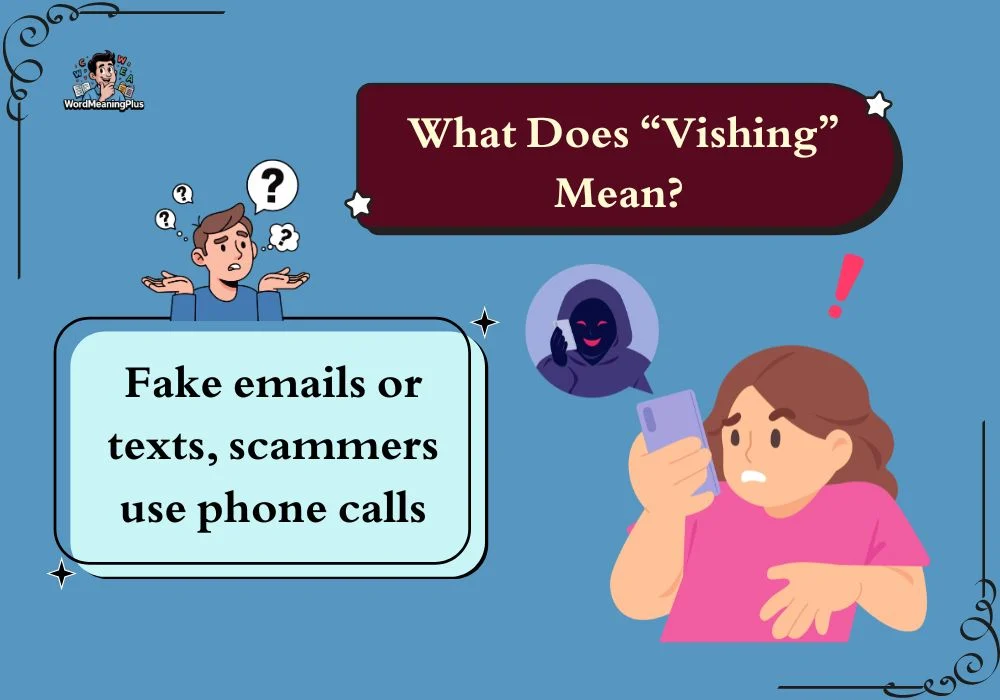
Vishing Meaning:
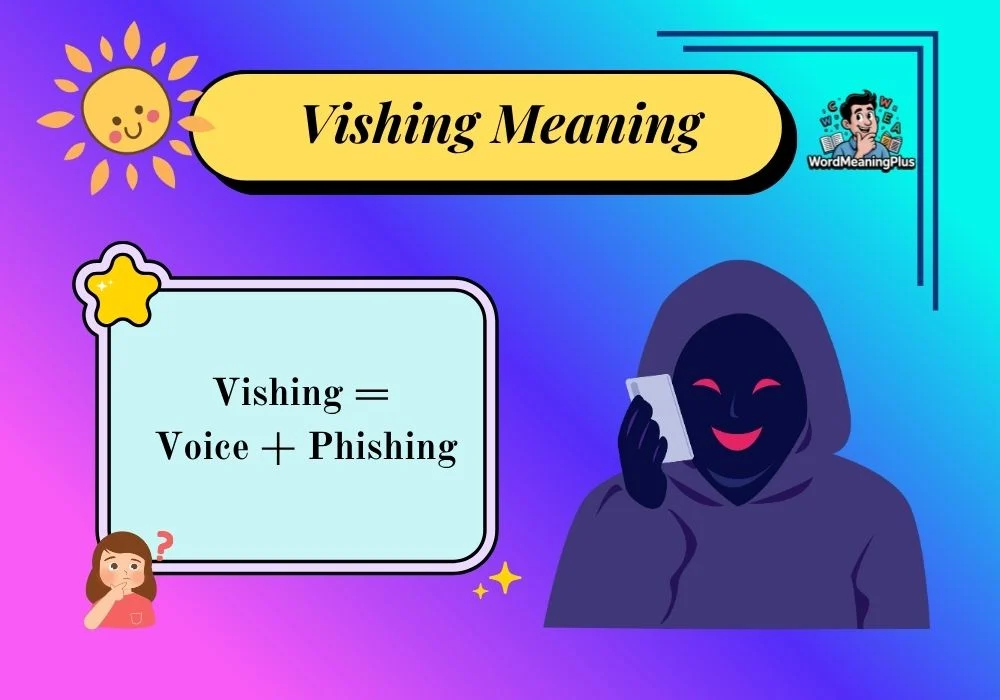
Vishing is a type of scam where someone uses voice calls or voice messages to trick you into giving away personal, financial, or login information.
👉 In short:
Vishing = Voice + Phishing
Instead of fake emails or texts, scammers use phone calls, voicemail, or voice notes to sound real and urgent.
Where Did the Term “Vishing” Come From?
The word vishing comes from combining:
- “Voice” (phone calls, voicemails)
- “Phishing” (online scams that steal information)
It started gaining attention in the early 2000s but has exploded in recent years due to:
- Cheap internet calling
- AI-generated voices
- Caller ID spoofing
- WhatsApp and Telegram voice messages
By 2026, vishing has become one of the most dangerous digital scams worldwide.
How Vishing Works in Real Life
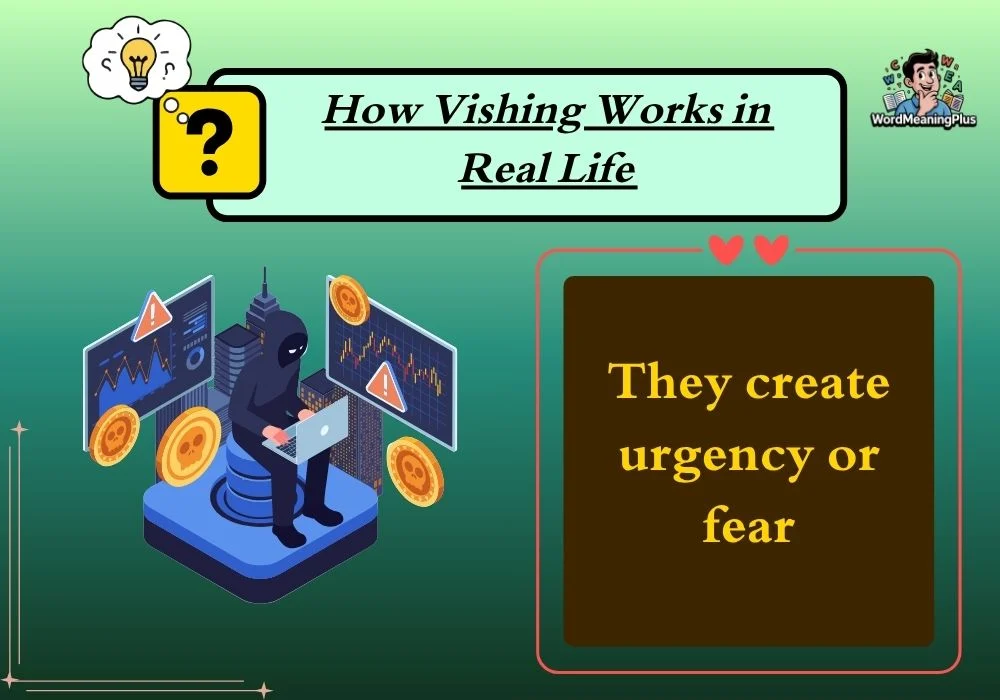
The Basic Vishing Process
Most vishing scams follow the same pattern:
- You receive a call or voicemail
- The caller pretends to be someone trusted
- They create urgency or fear
- They ask for sensitive information
- They disappear once they get it
Sounds simple, right? But when panic kicks in, people make mistakes.
Common Vishing Scenarios
Here are some realistic vishing examples people report today:
- 📞 “This is your bank. Your account will be frozen in 30 minutes.”
- 📦 “Your package is delayed. Confirm your card details.”
- 💻 “We detected a virus on your device. Press 1 to fix it.”
- 🧾 “You owe unpaid taxes. Immediate action required.”
- 🤖 AI voice sounds exactly like a real agent
Many of these now use AI-generated voices, making them scarier than ever.
How to Use the Word “Vishing” in Texts or Chat
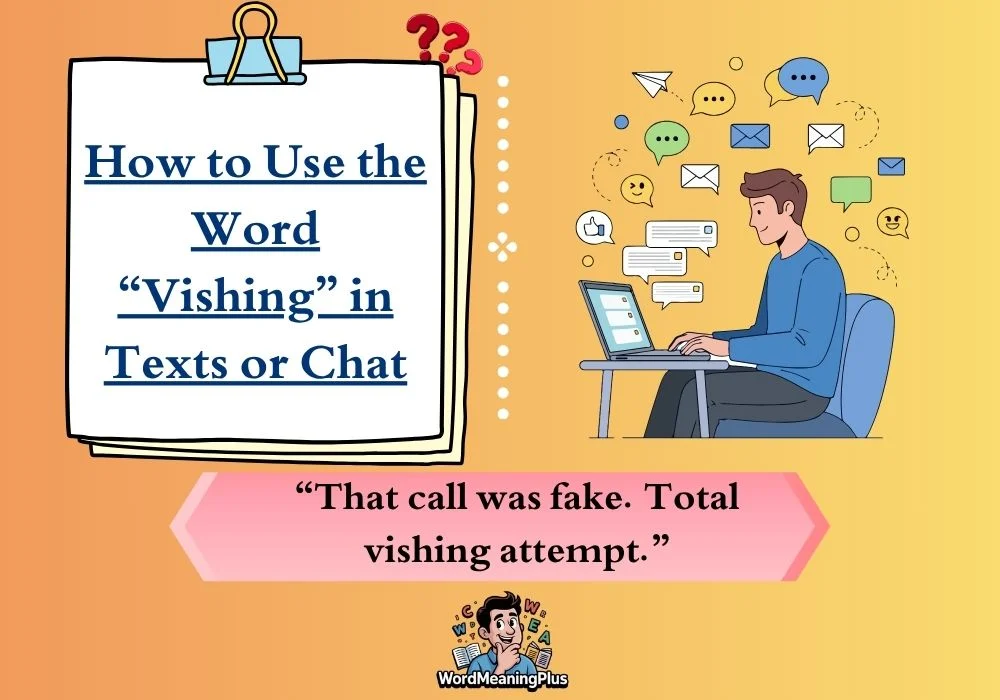
Yes, “vishing” is also used casually in chats, especially when warning others.
Correct Usage in Texting
You can use vishing when talking about scams, fraud, or suspicious calls.
Examples:
- “That call was fake. Total vishing attempt.”
- “Be careful—lots of vishing scams going around lately.”
- “My dad almost fell for a vishing call from ‘the bank.’”
It’s commonly used in:
- WhatsApp chats
- Twitter/X threads
- Reddit posts
- Cybersecurity forums
- Work Slack messages
Examples of “Vishing” in Conversations
Casual Chat Example
Friend 1:
“Bro, I got a call saying my PayPal is locked 😨”
Friend 2:
“That’s vishing, don’t give them anything.”
Workplace Example
Employee:
“Someone called asking for login codes.”
IT Team:
“That’s a vishing attack. Report it immediately.”
Family Group Chat Example
“Reminder: Don’t share OTPs. There’s a lot of vishing happening lately.”
Common Mistakes & Misunderstandings About Vishing
Mistake #1: Confusing Vishing with Phishing
Let’s clear this up:
- Phishing → Email or fake websites
- Smishing → SMS/text scams
- Vishing → Voice calls or voicemails
Many people think all scams are phishing—but vishing is voice-based.
Mistake #2: Trusting Caller ID
Caller ID can be spoofed.
Just because it shows:
- “Bank Name”
- “Government Office”
- “Support Team”
❌ Doesn’t mean it’s real.
Mistake #3: Thinking “It Won’t Happen to Me”
Vishing targets:
- Young adults
- Seniors
- Business owners
- Students
- Even cybersecurity experts
Scammers don’t care who you are—they care who reacts fast.
Why Vishing Is So Dangerous in 2026
AI Has Changed the Game
Modern vishing scams now use:
- AI-generated voices
- Real accents and tones
- Emotional manipulation
- Background call-center noise
Some scams even clone voices of:
- CEOs
- Managers
- Family members
That’s why knowing the vishing meaning is no longer optional—it’s essential.
How to Protect Yourself from Vishing Scams
Simple Safety Tips That Actually Work
✅ Never share:
- OTPs
- PINs
- Card numbers
- Login codes
✅ Hang up and call the official number yourself
✅ Don’t press keys during unknown calls
✅ Warn family members (especially elders)
✅ Report suspicious calls to your provider
Related Slangs & Abbreviations You Should Know
If you’re learning about vishing, these terms matter too:
- Phishing – Email-based scams
- Smishing – SMS/text scams
- Spoofing – Fake caller ID or email
- OTP Scam – Stealing one-time passwords
- Social Engineering – Manipulating human behavior
Is “Vishing” Used on Social Media?
Absolutely.
You’ll often see it on:
- X (Twitter)
- LinkedIn cybersecurity posts
- TikTok scam awareness videos
- YouTube tech channels
“Scammers are using AI voices now. Stay alert to vishing in 2026.”
FAQs
Is vishing illegal?
Yes. Vishing is considered fraud and is illegal in most countries.
Can vishing happen on WhatsApp?
Yes. Voice calls and voice notes are commonly used.
Is vishing increasing?
Yes. Reports show vishing scams are rising rapidly due to AI.
Final Thoughts: Why Knowing the Vishing Meaning Matters
Understanding the vishing meaning helps you stay one step ahead in a world where scams sound more real than ever. A simple phone call can lead to serious financial loss if you don’t recognize the signs.
By learning how vishing works, how it’s used in chats, and how scammers think, you protect not just yourself—but the people around you too. Awareness is your strongest defense.

Anderson is a passionate writer and language enthusiast who loves exploring the meanings of words, modern slang, and internet abbreviations. As the author of WordMeaningPlus.com, Anderson’s goal is to help readers understand the true meaning of words, phrases, and texting slang in simple and easy English.
With a strong interest in language, communication, and online trends, Anderson writes informative articles that explain word meanings, chat abbreviations, and social media slang in a way that is clear, helpful, and easy to understand. The main mission of WordMeaningPlus.com is to make language learning simple for everyone, especially students, bloggers, and internet users who want quick and accurate meanings.