Understanding the civic duty meaning is more important than ever—especially in today’s fast-moving world of texts, social media, and online conversations.
You might see someone say “It’s my civic duty” in a tweet, a meme, or even a group chat and wonder: Are they being serious… or sarcastic?
In modern digital culture, traditional terms like civic duty are no longer limited to textbooks or government classes.
They now pop up in casual chats, online debates, memes, and comment sections. Knowing what it really means—and how people use it today—helps you understand tone, intent, and sometimes even humor.
👉 Updated for 2026, this guide breaks down the civic duty meaning in simple, human language, with real-life examples, chat-style usage, and modern context.
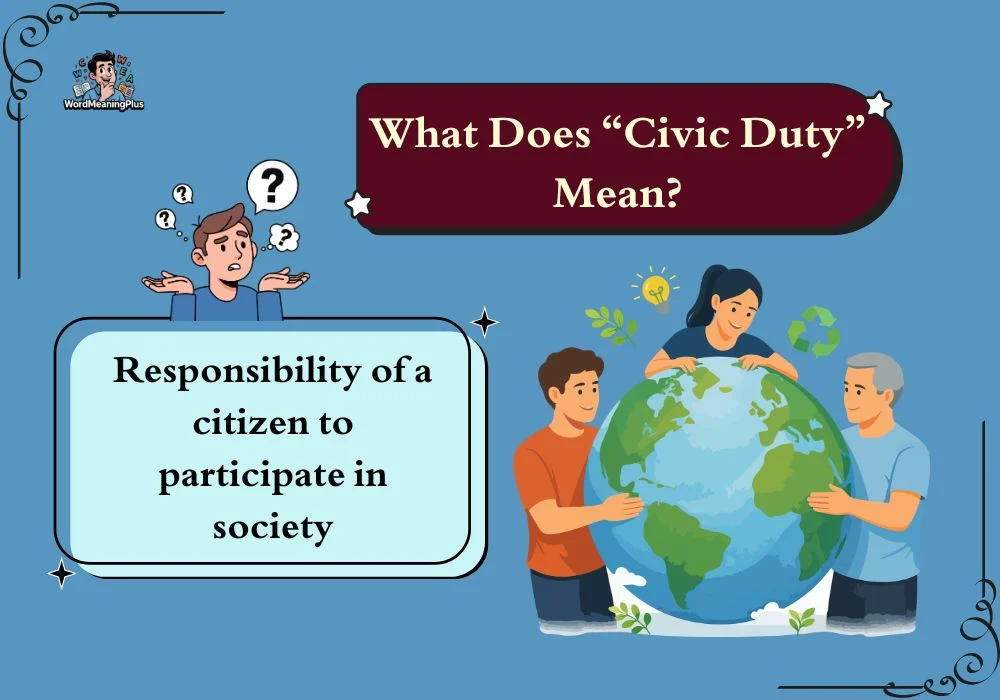
What Does “Civic Duty” Mean?
Simple Definition of Civic Duty
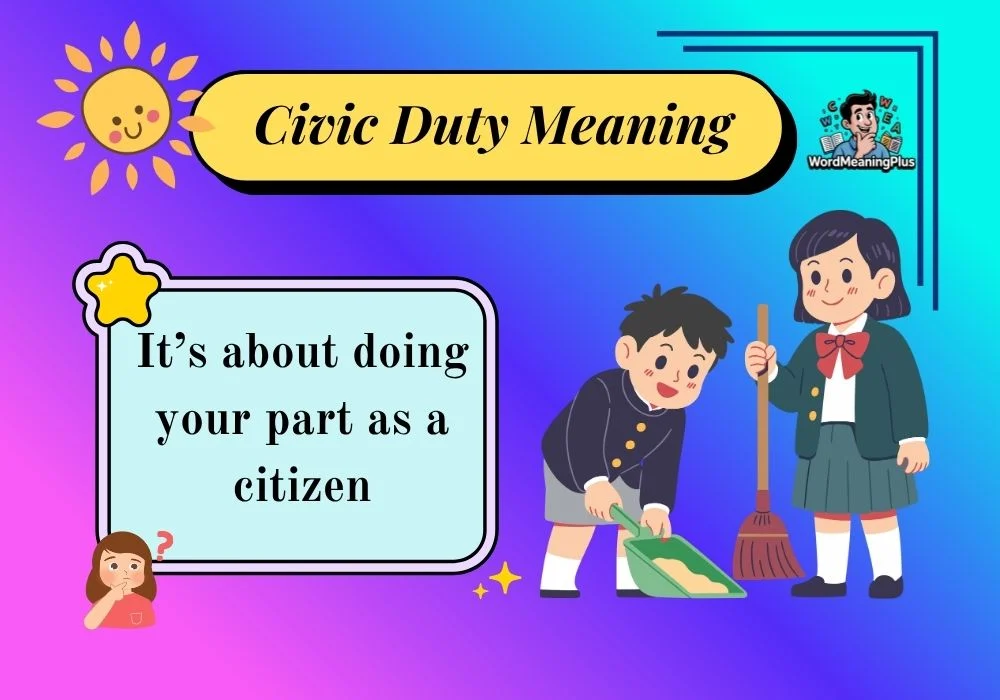
Civic duty means the responsibility of a citizen to participate in society and help their community or country function properly.
In short:
It’s about doing your part as a citizen.
Examples of civic duties include:
- Voting in elections
- Following laws
- Paying taxes
- Serving on a jury
- Helping your community
Origin of the Term “Civic Duty”
The term comes from:
- “Civic” → related to citizenship or public life
- “Duty” → something you are morally or legally expected to do
Historically, the phrase was used in:
- Government documents
- Political speeches
- School civics classes
But in 2026, the civic duty meaning has expanded beyond formal use and entered everyday conversations—especially online.
Civic Duty Meaning in Modern Texting & Online Culture
How the Meaning Has Evolved
While the core meaning stays the same, how people use “civic duty” today has changed.
In chats and social media, it can be:
- Serious → encouraging responsibility
- Motivational → pushing action
- Sarcastic or funny → exaggerating small actions
Common Online Contexts
You’ll often see civic duty used on:
- Twitter/X
- Reddit threads
- TikTok captions
- Group chats
- Meme comments
Example:
“Liking this post is my civic duty”
Here, the phrase is used ironically, not literally.
How to Use “Civic Duty” in Texts or Chat
1. Serious Usage (Traditional Meaning)
This is when someone means actual responsibility as a citizen.
Example texts:
- “I’m voting tomorrow. It’s my civic duty.”
- “Serving on a jury is part of civic duty.”
Use this tone when:
- Talking about politics
- Discussing social responsibility
- Encouraging participation
2. Casual or Semi-Serious Usage
People often soften the phrase in everyday chats.
Examples:
- “Sharing this info feels like a civic duty.”
- “Reminding people to recycle is a civic duty at this point.”
This usage blends seriousness with casual language.
3. Funny or Sarcastic Usage (Very Popular in 2026)
This is where the phrase really shines online.
Chat-style examples:
- “Correcting grammar online is my civic duty.”
- “Watching this show is a civic duty, trust me.”
- “Posting memes during exams week = civic duty 😌”
In these cases, civic duty meaning becomes playful and exaggerated.
Examples of “Civic Duty” in Real Conversations
Example 1: Group Chat
Alex: “Why are you still awake?”
Sam: “Someone had to warn people about spoilers. Civic duty.”
👉 Meaning: Sam is jokingly saying they had to do it.
Example 2: Social Media Comment
“Reporting fake news is a civic duty.”
👉 Meaning: Encouraging responsible online behavior.
Example 3: Meme Caption
“When you remind your friend to drink water—civic duty fulfilled.”
👉 Meaning: Used humorously, not literally.
Common Mistakes or Misunderstandings
Mistake #1: Thinking It Only Applies to Government Stuff
Many people assume civic duty only means:
- Voting
- Taxes
- Military service
But in modern usage, it can also mean:
- Social responsibility
- Community care
- Ethical online behavior
Mistake #2: Using It Too Formally in Casual Chats
Saying:
“It is my civic duty to inform you…”
…can sound overly serious unless you’re being ironic.
💡 Tip: Match the tone to the context.
Mistake #3: Confusing Civic Duty with Personal Choice
Civic duty implies:
- Responsibility
- Moral or social obligation
Personal choice is:
- Optional
- Preference-based
Example:
- Voting = civic duty
- Choosing a favorite movie = personal choice
Related Slangs, Phrases, and Abbreviations
While civic duty isn’t an abbreviation itself, it’s often used alongside or replaced by modern slang.
Similar or Related Terms
- Doing my part – casual alternative
- For the greater good – dramatic or sarcastic
- Be a responsible citizen – formal tone
- Mandatory vibes – slangy replacement
- Gotta step up – informal version
Slangy Replacements in Texting
Instead of saying “civic duty,” people might text:
- “Had to do it 💀”
- “Someone had to say it”
- “Doing the right thing fr”
When Should You Use “Civic Duty” in 2026?
Best Situations to Use It
Use civic duty when:
- Talking about responsibility
- Making a serious point
- Adding humor through exaggeration
- Commenting on social issues
Situations to Avoid
Avoid using it:
- In very casual chats without context
- When clarity matters (it can sound sarcastic)
- In professional messages unless appropriate
Civic Duty Meaning Explained in One Line
👉 Civic duty means the responsibility of a citizen to act in ways that support society—and online, it’s often used seriously or humorously to show responsibility.
Why Understanding Civic Duty Meaning Matters Today
In the age of:
- Viral posts
- Meme culture
- Online debates
Words don’t always mean exactly what they used to.
Understanding the civic duty meaning helps you:
- Catch sarcasm
- Understand online tone
- Communicate clearly
- Avoid misunderstandings
Especially in 2026, where language evolves fast, knowing how traditional terms are reused online gives you an edge.
Conclusion:
To sum it up, civic duty is about doing your part as a citizen, whether that’s voting, following laws, or helping your community.
But in modern texting and online culture, it has also become a fun, sarcastic, or expressive way to describe taking responsibility—even for small or funny things.
The key is context. In serious discussions, it keeps its traditional meaning. In chats and memes, it often carries humor or exaggeration. Knowing the difference helps you read between the lines and use the phrase correctly.

Jackson Cooper is a passionate writer and language enthusiast who loves exploring the meanings of words, modern slang, and internet abbreviations. As the author of WordMeaningPlus.com, Jackson Cooper is to help readers understand the true meaning of words, phrases, and texting slang in simple and easy English.
With a strong interest in language, communication, and online trends, Jackson Cooper writes informative articles that explain word meanings, chat abbreviations, and social media slang in a way that is clear, helpful, and easy to understand. The main mission of WordMeaningPlus.com is to make language learning simple for everyone, especially students, bloggers, and internet users who want quick and accurate meanings.