If you’ve ever searched “part of speech meaning” while reading a text, comment, or online post, you’re not alone.
In 2026, texting and internet language move fast. Words no longer stick to one grammar rule. A noun can suddenly act like a verb. An adjective can become slang. Even emojis now replace entire parts of speech.
Understanding the part of speech meaning helps you:
- Decode confusing messages
- Avoid embarrassing grammar mistakes
- Sound smarter and more natural online
- Understand how modern slang bends grammar rules
This guide explains part of speech meaning in simple, human language, with real chat examples, modern usage, and texting-friendly explanations — updated for 2026.
What Does “Part of Speech Meaning” Mean?
Simple Definition
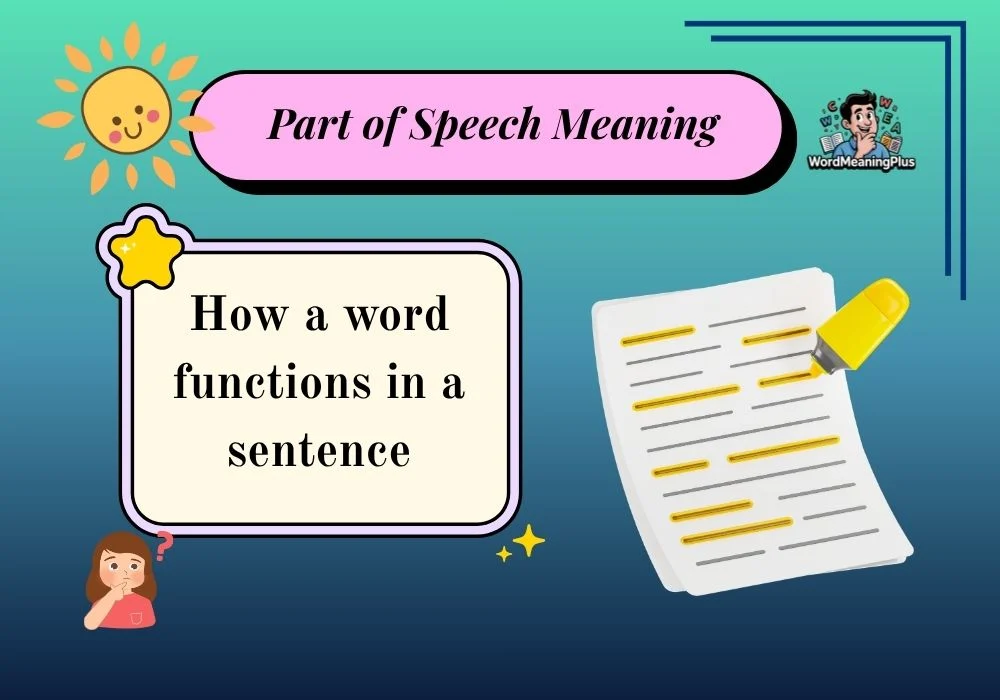
Part of speech meaning refers to how a word functions in a sentence, not just what it means.
In English, every word plays a role — like an actor in a movie.
The 8 Main Parts of Speech (Quick Overview)
Here’s a simple breakdown:
- Noun – a person, place, thing, or idea
👉 dog, phone, love - Pronoun – replaces a noun
👉 he, she, they - Verb – shows action or state
👉 run, text, is - Adjective – describes a noun
👉 cool, fast, broken - Adverb – describes a verb, adjective, or adverb
👉 quickly, very - Preposition – shows relationship
👉 in, on, at - Conjunction – joins words or sentences
👉 and, but, because - Interjection – shows emotion
👉 wow, omg, hey
Why This Matters in Texting & Online Chat
In modern chat:
- Words change roles
- Grammar rules are flexible
- Slang ignores textbooks
Example:
“That movie was a must-watch.”
Here, must acts like an adjective — not a verb.
That’s why understanding part of speech meaning is essential today.
How “Part of Speech Meaning” Works in Texts & Chats
Words Can Change Their Job
In texting, a word’s role matters more than its dictionary meaning.
Example:
- Textbook noun: Google is a company.
- Chat verb: Just Google it.
Same word. Different part of speech meaning.
Slang Breaks Grammar (On Purpose)
Modern slang uses:
- Nouns as verbs
- Adjectives as nouns
- Verbs without subjects
Example:
“Adulting today 😭”
“Adulting” is a verb made from a noun.
Emojis Replace Parts of Speech
In 2025, emojis often act as:
- Nouns: 🍕 = pizza
- Verbs: 💀 = died laughing
- Adjectives: 🔥 = amazing
Example:
“That outfit is 🔥”
🔥 = adjective
Examples of “Part of Speech Meaning” in Conversations
Example 1: Noun vs Verb
Text:
“Let’s text later.”
- Text = verb
Another text:
“Send me a text.”
- Text = noun
Same word. Different part of speech meaning.
Example 2: Adjective Turned Noun
Text:
“That’s a big nope.”
“Nope” works as a noun, even though it’s usually an interjection.
Example 3: Verb Turned Slang
Text:
“He really ghosted me.”
“Ghosted” = verb (slang)
Example 4: Interjections in Chat
Text:
“OMG that just happened”
“OMG” = interjection expressing emotion.
How to Use “Part of Speech Meaning” Correctly
Step 1: Look at the Sentence, Not the Word
Ask:
- What is the word doing here?
- Is it naming?
- Describing?
- Showing action?
Step 2: Watch for Context Clues
Example:
“That’s so extra.”
“Extra” works as an adjective, not a noun.
Step 3: Follow Platform Style
- Texting: informal, flexible
- Twitter/X: slang-heavy
- Reddit: mixed grammar
- School/work: stricter rules
Step 4: Don’t Overthink Casual Chats
Grammar rules matter less in:
- DMs
- Comments
- Group chats
Understanding part of speech meaning helps you read correctly — not judge others.
Common Mistakes & Misunderstandings
Mistake 1: Assuming One Meaning Only
❌ “That word is always a noun.”
✅ Words change roles in chat.
Mistake 2: Correcting Slang Grammar
❌ “That’s not proper English.”
✅ Slang follows usage, not textbooks.
Mistake 3: Ignoring Tone
Example:
“Sure.”
- Could be a verb response
- Could be sarcasm
- Could be dismissal
Tone affects meaning more than grammar.
Mistake 4: Misreading Emojis
Example:
“I’m fine 💀”
💀 = not fine at all
Related Slangs & Grammar Terms You Should Know
Similar Concepts
- Slang Grammar
- Contextual Meaning
- Word Function
- Syntax in Chat
- Internet Linguistics
Popular Slang That Changes Parts of Speech
- Flex (noun → verb)
- Cap (noun → verb)
- Sus (adjective → noun)
- Vibe (noun → verb)
Example:
“This place vibes.”
Optional Internal Linking Ideas (For SEO)
- What Does “Sus” Mean in Text?
- What Does “Cap / No Cap” Mean?
- Internet Slang Grammar Explained
- Emoji Meanings in Texting
Why “Part of Speech Meaning” Is More Important in 2026
Language online evolves faster than dictionaries.
In 2026:
- AI influences speech
- Memes shape grammar
- Short-form content changes structure
Understanding part of speech meaning helps you:
- Read between the lines
- Understand Gen Z & Gen Alpha slang
- Write better captions & replies
- Avoid miscommunication
Quick Cheat Sheet: Part of Speech Meaning in Chat
| Word | Sentence | Part of Speech |
|---|---|---|
| Text | “Text me” | Verb |
| Text | “Send a text” | Noun |
| Extra | “That’s extra” | Adjective |
| Ghost | “He ghosted me” | Verb |
| Fire 🔥 | “That’s fire” | Adjective |
Conclusion: Final Thoughts on Part of Speech Meaning
Understanding part of speech meaning isn’t about being perfect at grammar. It’s about understanding people.
In modern texting, words are flexible, slang is powerful, and meaning depends on context more than rules. Once you understand how parts of speech shift in chat, everything online starts to make more sense.

Anderson is a passionate writer and language enthusiast who loves exploring the meanings of words, modern slang, and internet abbreviations. As the author of WordMeaningPlus.com, Anderson’s goal is to help readers understand the true meaning of words, phrases, and texting slang in simple and easy English.
With a strong interest in language, communication, and online trends, Anderson writes informative articles that explain word meanings, chat abbreviations, and social media slang in a way that is clear, helpful, and easy to understand. The main mission of WordMeaningPlus.com is to make language learning simple for everyone, especially students, bloggers, and internet users who want quick and accurate meanings.