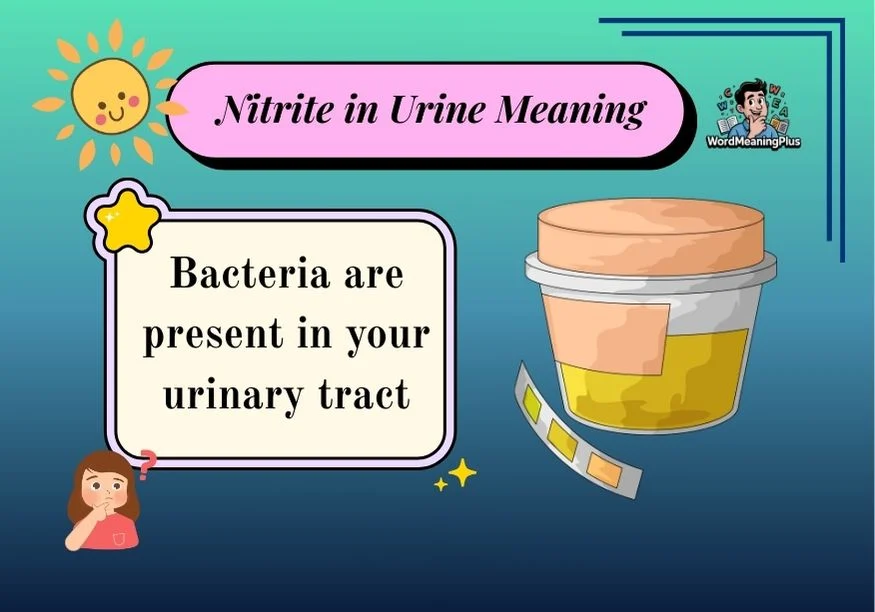
If you’ve ever seen “nitrite positive” on a urine test report and felt confused or worried, you’re not alone. The phrase nitrite in urine sounds technical, but its meaning is actually easy to understand once it’s broken down in simple terms.
In today’s world of fast lab reports, online medical portals, and quick Google searches, understanding test results is just as important as understanding text abbreviations. Knowing the nitrite in urine meaning can help you spot possible infections early, ask smarter questions, and avoid unnecessary panic.
This guide is updated for 2026, written in plain, human language, and designed to give you real clarity—not medical jargon overload.
What Does Nitrite in Urine Mean? (Definition & Origin)
Simple Definition
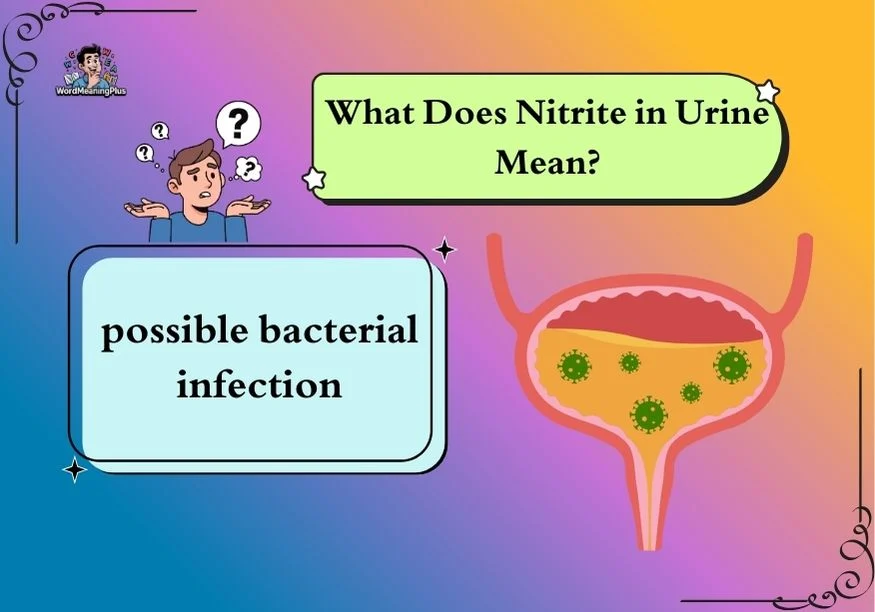
Nitrite in urine means that certain bacteria are present in your urinary tract. These bacteria convert nitrates (normally found in urine) into nitrites.
👉 In short:
Nitrites = possible bacterial infection, most commonly a UTI (Urinary Tract Infection).
Why Nitrites Are Not Normally in Urine
Under normal conditions:
- Your urine contains nitrates
- Nitrites should be absent
Nitrites only appear when bacteria change nitrates into nitrites, which is why doctors use this as a clue, not a final diagnosis.
Where This Term Comes From
The term comes from:
- Urinalysis dipstick tests
- Routine lab screenings
- ER, clinic, and home UTI test kits
It’s not slang—but it is a commonly searched medical phrase, especially when people see it unexpectedly on test results.
Why Is Nitrite in Urine Important?

Understanding the nitrite in urine meaning matters because it can indicate:
- A urinary tract infection
- Bacterial activity in the bladder
- Need for further testing or treatment
What a Positive Nitrite Test Usually Suggests
- Gram-negative bacteria (like E. coli)
- Bladder or lower urinary tract infection
- Infection that has been present long enough for bacteria to convert nitrates
💡 Fun fact (and helpful one):
Not all bacteria produce nitrites—so a negative result doesn’t always rule out infection.
How Is Nitrite in Urine Detected?
1. Urine Dipstick Test
This is the most common method:
- Quick
- Cheap
- Used in clinics and home kits
The strip changes color if nitrites are present.
2. Laboratory Urinalysis
A lab test confirms:
- Nitrites
- White blood cells (leukocytes)
- Bacteria count
3. Urine Culture (Follow-Up Test)
If nitrites are positive:
- A culture may be ordered
- Identifies exact bacteria
- Helps choose the right antibiotic
Nitrite Positive vs Nitrite Negative: What’s the Difference?
Nitrite Positive
Usually means:
- Bacterial infection likely
- Often associated with UTI
- Especially common in women
Nitrite Negative
Does NOT always mean:
- No infection
Reasons nitrites may be negative:
- Infection caused by non–nitrite-producing bacteria
- Urine hasn’t been in the bladder long enough
- Very diluted urine
🔍 That’s why doctors look at symptoms + other markers, not nitrites alone.
Common Causes of Nitrite in Urine
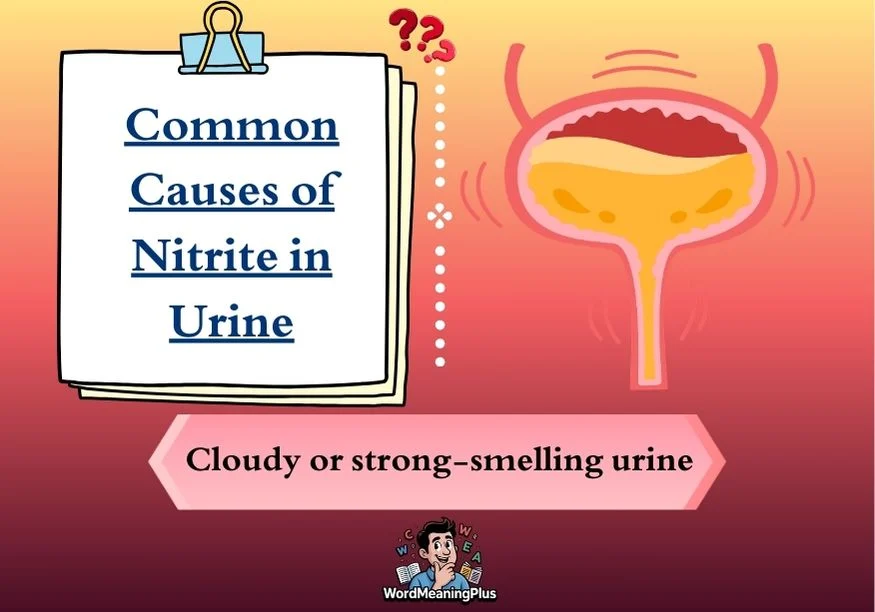
Here are the most common reasons nitrites show up:
1. Urinary Tract Infection (UTI)
The #1 cause.
Symptoms may include:
- Burning during urination
- Frequent urge to pee
- Cloudy or strong-smelling urine
- Lower abdominal pain
2. Poor Bladder Emptying
Urine sitting longer = more time for bacteria to convert nitrates.
3. Catheter Use
Increases bacterial exposure.
4. Dehydration
Concentrated urine makes detection easier.
How to Use This Information Correctly
People usually search nitrite in urine meaning after:
- Seeing lab results online
- Using a home UTI test
- Experiencing urinary symptoms
- Pregnancy urine tests
- ER or urgent care visits
Correct Way to Interpret It
✅ Use it as a signal, not a diagnosis
✅ Combine with symptoms
✅ Follow up with a healthcare provider
❌ Don’t self-diagnose
❌ Don’t ignore symptoms even if nitrites are negative
Examples of Nitrite in Urine in Real Situations
Example 1: Classic UTI Case
“My urine test says nitrite positive and leukocytes high.”
Meaning:
- Very likely UTI
- Antibiotics may be prescribed
Example 2: Confusing Report
“Nitrites positive but I feel fine.”
Meaning:
- Early infection
- Asymptomatic bacteriuria
- May need monitoring, not immediate treatment
Example 3: Negative Nitrites but Symptoms
“Nitrites negative but burning when peeing.”
Meaning:
- Infection still possible
- Further tests needed
Common Mistakes & Misunderstandings
❌ “Nitrites mean kidney failure”
False.
Nitrites point to bacteria, not kidney damage.
❌ “Positive nitrites always need antibiotics”
Not always. Depends on:
- Symptoms
- Pregnancy status
- Bacterial count
❌ “Negative nitrites mean no infection”
Also false.
Nitrite in Urine During Pregnancy: What It Means
During pregnancy:
- UTIs are more common
- Even mild infections matter
If nitrites are present:
- Doctors take it seriously
- Treatment is often started earlier
- Prevents complications
⚠️ Pregnant women should never ignore nitrite-positive results.
Related Lab Terms You’ll Often See Together
Understanding related terms helps a lot:
- Leukocytes in urine – white blood cells
- Bacteria in urine – visible under microscope
- Protein in urine – kidney or infection indicator
- Blood in urine – irritation or infection
- Nitrates – normal urine component
Related Searches (Internal Linking Ideas)
- Leukocytes in urine meaning
- Cloudy urine causes
- UTI symptoms in women
- Home urine test accuracy
Is Nitrite in Urine Dangerous?
By itself:
- ❌ Not dangerous
Left untreated:
- ✅ Can lead to kidney infection
- ✅ Can cause complications in pregnancy
- ✅ May worsen symptoms
Early detection = easy treatment.
When Should You See a Doctor?
See a doctor if you have:
- Nitrite-positive results AND symptoms
- Fever or back pain
- Recurrent UTIs
- Pregnancy
- Diabetes or weakened immunity
How Doctors Treat Nitrite-Positive Urine
Treatment may include:
- Antibiotics (based on culture)
- Increased fluids
- Follow-up testing
Most UTIs improve within 2–3 days after treatment starts.
Final Thoughts: Nitrite in Urine Meaning Explained Simply
To sum it up, the nitrite in urine meaning is straightforward: it usually signals bacterial activity, most often a urinary tract infection. It’s a helpful clue—not a final verdict.
Understanding your urine test results empowers you to:
- Communicate better with doctors
- Avoid panic
- Act early when needed

Michel Joy is a passionate writer and language enthusiast who loves exploring the meanings of words, modern slang, and internet abbreviations. As the author of WordMeaningPlus.com, Michel Joy’s goal is to help readers understand the true meaning of words, phrases, and texting slang in simple and easy English.
With a strong interest in language, communication, and online trends, Michel Joy writes informative articles that explain word meanings, chat abbreviations, and social media slang in a way that is clear, helpful, and easy to understand. The main mission of WordMeaningPlus.com is to make language learning simple for everyone, especially students, bloggers, and internet users who want quick and accurate meanings.