If you’ve ever seen someone type “I was diagnosed with dystonia” or “my dystonia is acting up today” in a chat, forum, or comment section and thought, “Wait… what does dystonia mean?” — you’re not alone.
In today’s digital world, medical terms don’t just stay in hospitals anymore. They show up in texts, social media posts, Reddit threads, TikTok captions, and support group chats. Understanding the meaning of dystonia helps you avoid confusion, respond with empathy, and actually know what someone is talking about when they mention it online.
This guide explains dystonia meaning in clear, human language, with real-life examples, common misunderstandings, and how the word is used in online conversations.
Updated for 2026, and written to be genuinely helpful — not robotic or overly medical.
What Does Dystonia Mean?
Dystonia Meaning
Dystonia is a neurological movement condition that causes muscles to contract or tighten involuntarily, leading to twisting movements, repetitive motions, or unusual postures.
In simple terms:
👉 The brain sends mixed-up signals to the muscles, causing them to move when the person doesn’t want them to.
These muscle movements can be:
- Mild or severe
- Short-term or long-lasting
- Painful or just uncomfortable
Where Does the Word “Dystonia” Come From?
The word dystonia comes from Greek:
- “dys” = abnormal or difficult
- “tonia” = muscle tone
So, dystonia literally means “abnormal muscle tone.”
Even though it’s a medical term, people now use it casually in chats and posts, especially in health communities.
How Is “Dystonia” Used in Texts and Online Chats?
Unlike slang abbreviations (like IDK or TBH), dystonia is usually used literally, not as a joke or metaphor.
You’ll most often see it used in:
- Health-related chats
- Support groups
- Awareness posts
- Personal updates
Common Ways People Use “Dystonia” Online
- Talking about a diagnosis
- Explaining physical symptoms
- Sharing daily struggles
- Raising awareness
📱 Example from a chat:
“Sorry I didn’t reply earlier, my dystonia was really bad this morning.”
📱 Example from social media:
“Living with dystonia isn’t easy, but today was a good day 💙”
Examples of “Dystonia” in Real Conversations
Here are realistic, relatable examples showing how people actually use the word:
Example 1: Casual Text
“My neck keeps pulling to one side — doctor says it’s dystonia.”
Example 2: Support Group Post
“Anyone else with hand dystonia struggle while typing?”
Example 3: Awareness Tweet
“Dystonia is invisible but very real. Be kind.”
Example 4: Reddit Comment
“I thought it was anxiety for years, turns out it was dystonia.”
Notice something important?
👉 People usually don’t shorten dystonia or turn it into slang. The word itself carries meaning and weight.
Types of Dystonia
Understanding the different types helps explain why people experience it differently.
Common Types Mentioned Online
- Cervical dystonia – affects the neck
- Hand dystonia – affects fingers or hands
- Generalized dystonia – affects multiple parts of the body
- Focal dystonia – affects one specific area
📌 Online example:
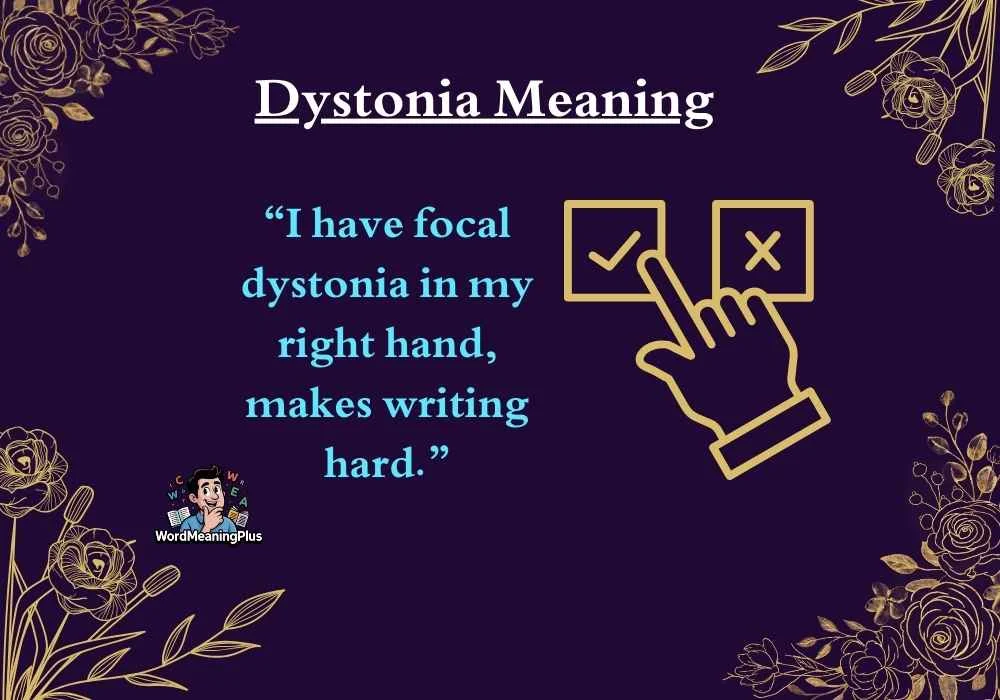
“I have focal dystonia in my right hand, makes writing hard.”
Common Mistakes or Misunderstandings About Dystonia
Because the word appears more online now, misunderstandings are common.
Mistake 1: Thinking Dystonia Is Just Stress
❌ “It’s probably just anxiety.”
✅ Dystonia is a neurological condition, not just nerves.
Mistake 2: Confusing Dystonia With Tremors
While tremors involve shaking, dystonia causes sustained muscle contractions or twisting, not rhythmic shaking.
Mistake 3: Assuming It’s Rare or Untreatable
Dystonia is more common than many people think, and while there’s no universal cure, many people manage symptoms with treatment and support.
How to Respond When Someone Mentions Dystonia
If someone brings up dystonia in chat or comments, here’s how to respond respectfully.
Good Responses
- “Thanks for sharing — that sounds tough.”
- “I didn’t know much about dystonia, but I’m learning.”
- “Hope today is an easier day for you.”
Avoid Saying
- “At least it’s not serious.”
- “Everyone has muscle pain.”
- “Have you tried just relaxing?”
Empathy > advice. Always.
Related Terms Often Seen With “Dystonia”
When researching or reading chats, you may see dystonia mentioned alongside:
- Neurological condition
- Muscle spasms
- Involuntary movements
- Movement disorder
- Chronic condition
Related Search Terms
- dystonia meaning in medical terms
- what is dystonia disorder
- dystonia symptoms explained
- dystonia meaning in simple words
These variations help search engines — and humans — understand the topic better.
Is “Dystonia” Ever Used as Slang?
Short answer: No.
Unlike internet slang, dystonia is not used metaphorically or jokingly. It’s almost always used:
- Seriously
- Literally
- In health-related contexts
If someone uses it, they usually mean the actual medical condition.
Why Understanding Dystonia Meaning Matters Online
In 2026, health conversations are everywhere:
- TikTok health creators
- Mental & physical health awareness posts
- Reddit advice threads
- Discord support servers
Knowing what dystonia means helps you:
- Avoid awkward replies
- Show empathy
- Understand personal stories
- Spot misinformation
Quick Summary:
- Dystonia = involuntary muscle contractions
- Caused by neurological signal issues
- Can affect one area or multiple parts of the body
- Commonly discussed in online health communities
- Not slang — always used seriously
Conclusion:
The meaning of dystonia goes beyond a dictionary definition. In today’s online world, it represents real people, real struggles, and real conversations happening every day in texts, posts, and chats.
Understanding what dystonia means allows you to communicate with empathy, clarity, and awareness — especially when someone opens up about their condition online.
As health conversations continue to grow across digital platforms in 2025, knowing terms like dystonia helps make the internet a more informed and compassionate place.

John Hudson is a passionate writer and language enthusiast who loves exploring the meanings of words, modern slang, and internet abbreviations. As the author of WordMeaningPlus.com, John Hudson’s goal is to help readers understand the true meaning of words, phrases, and texting slang in simple and easy English.
With a strong interest in language, communication, and online trends, John Hudson writes informative articles that explain word meanings, chat abbreviations, and social media slang in a way that is clear, helpful, and easy to understand. The main mission of WordMeaningPlus.com is to make language learning simple for everyone, especially students, bloggers, and internet users who want quick and accurate meanings.