Understanding financial terms isn’t just for accountants anymore. In 2026, words like “vested balance” show up everywhere — from workplace chats and HR emails to finance apps, Reddit threads, and even casual texts.
If you’ve ever seen someone mention vested balance and felt confused, you’re not alone.
This guide breaks down the vested balance meaning in simple, easy English, with real-life examples, chat-style explanations, and practical tips so you can confidently understand and use the term — whether you’re texting, planning your future, or checking your retirement app.
🔍 What Does Vested Balance Mean?
Vested Balance Meaning (Simple Definition)
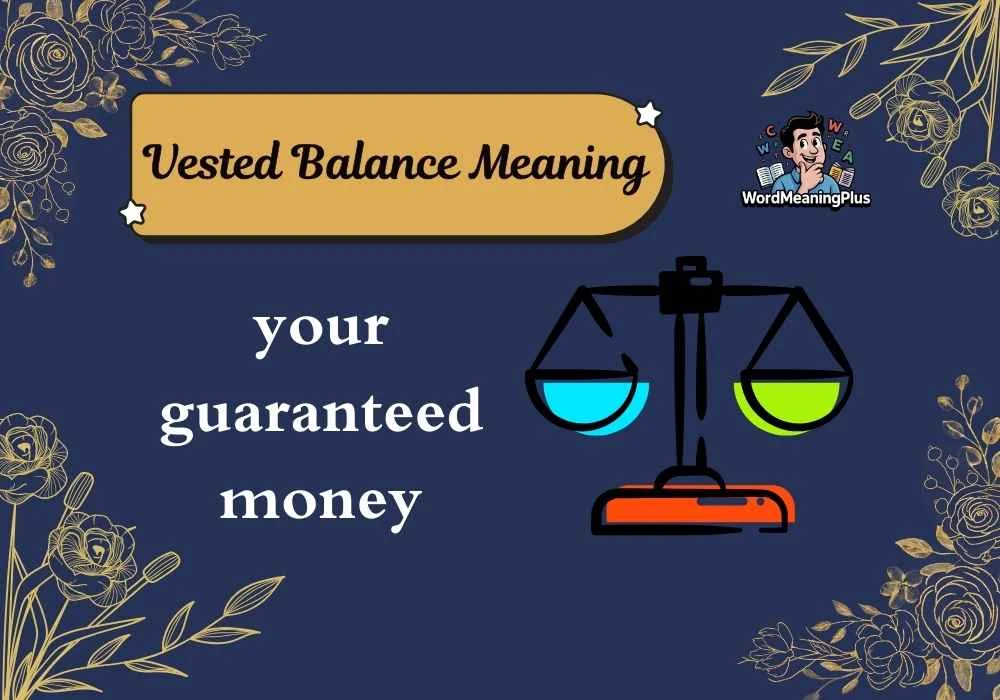
Vested balance is the amount of money that legally belongs to you in a retirement or investment account — even if you quit your job today.
In short:
Vested balance = your guaranteed money
You can’t lose it, and your employer can’t take it back.
🧠 Where Does the Term Come From?
The word “vested” comes from legal and financial language, meaning fully owned or secured. Over time, it became common in:
- Retirement plans (401(k), pension)
- Employee benefits
- Stock options
- HR emails and workplace chats
Today, people casually say things like:
“Check your vested balance before quitting.”
That’s why understanding this term matters — especially in modern work culture.
💬 How Is Vested Balance Used in Texts or Chats?
While it’s a financial term, vested balance is now used casually in:
- Slack or Microsoft Teams
- WhatsApp office groups
- Emails from HR
- Reddit finance threads
- LinkedIn career discussions
Common Chat-Style Usage
People often shorten or casually reference it like this:
- “Only my vested balance shows up in the app”
- “You’ll lose the unvested part, not the vested balance”
- “My vested balance is safe even if I leave”
Even though it sounds serious, it’s now normal workplace language.
🧾 Real-Life Examples of Vested Balance
Example 1: Workplace Retirement Plan
Let’s say:
- You contributed $8,000
- Your employer added $4,000
- Only $2,000 of employer money is vested
👉 Your vested balance = $10,000
That money is 100% yours.
Example 2: Casual Chat Scenario
Alex: “I’m thinking of switching jobs.”
Sam: “Check your vested balance first — don’t leave money behind.”
This is a very common 2026 usage in work chats.
Example 3: Finance App Notification
“Your total balance is $18,000.
Vested balance: $12,500.”
Translation: $12,500 is safe. The rest depends on job conditions.
⚙️ How to Use Vested Balance Correctly
✔ Correct Usage
Use vested balance when talking about:
- Money you fully own
- Retirement savings
- Employer benefits
- Long-term financial planning
Correct examples:
- “My vested balance increases every year.”
- “I can withdraw my vested balance after retirement.”
- “The vested balance won’t disappear if I resign.”
❌ Incorrect Usage (Common Mistakes)
Many people confuse vested balance with:
| ❌ Mistake | ✅ Correct Meaning |
|---|---|
| Total account balance | Only guaranteed money |
| Salary | Not related to paychecks |
| Bonus money | Only if vested |
| Spendable cash | Often locked until retirement |
🚫 Saying “I spent my vested balance” is usually wrong.
🤔 Common Misunderstandings About Vested Balance
❗ “Vested Balance = All My Money”
Not always.
Your account may show:
- Total balance
- Vested balance
- Unvested balance
Only the vested balance is guaranteed.
❗ “I Get It Immediately”
Some companies use vesting schedules, such as:
- 25% after 1 year
- 50% after 2 years
- 100% after 4 years
Until then, part of your money is unvested.
🧠 Why Vested Balance Matters in 2026
In today’s job-hopping culture, people switch jobs more often than ever. That’s why vested balance has become a hot topic in:
- Career planning
- Financial independence discussions
- Online forums like Reddit
- TikTok finance videos
- Chat groups and DMs
Knowing your vested balance helps you:
- Avoid losing money
- Plan job changes smarter
- Understand employer benefits
- Protect your future savings
🔗 Related Slang, Terms, and Abbreviations
Here are related terms you’ll often see alongside vested balance:
- 401(k) – U.S. retirement plan
- Unvested balance – money not yet yours
- Employer match – company contribution
- Vesting period – time required to own funds
- Fully vested – 100% ownership
- Retirement funds – long-term savings
📝 How to Explain Vested Balance to a Friend
If someone asks you casually, just say:
“Your vested balance is the part of your savings that’s fully yours — even if you leave your job.”
That’s it. Simple. Clear. Accurate.
🧩 Funny but Relatable Scenario
“I quit my job thinking I lost everything…
Turns out my vested balance said ‘Nah, I’m yours forever.’ 😌”
Finance humor is trending in 2026 — and yes, people joke about this now.
✅ Key Takeaways (Quick Summary)
- Vested balance means money you fully own
- It’s common in retirement plans and benefits
- Not all account money is vested immediately
- The term is widely used in modern chats and workplaces
- Understanding it helps you protect your future
📢 Final Thoughts
The vested balance meaning isn’t just a boring finance term anymore. It’s part of everyday workplace talk, online discussions, and career planning. Once you understand it, you’ll never feel lost reading HR emails or finance apps again.
Knowing your vested balance = knowing what’s truly yours.
See More:
191+Ragnarok Meaning – Definition, Myth, and Real Story 2026
199+Tailgate Meaning in Urdu and English – Full Explanation 2026
190+Discard Meaning in Text and Online Slang (2026)

John Hudson is a passionate writer and language enthusiast who loves exploring the meanings of words, modern slang, and internet abbreviations. As the author of WordMeaningPlus.com, John Hudson’s goal is to help readers understand the true meaning of words, phrases, and texting slang in simple and easy English.
With a strong interest in language, communication, and online trends, John Hudson writes informative articles that explain word meanings, chat abbreviations, and social media slang in a way that is clear, helpful, and easy to understand. The main mission of WordMeaningPlus.com is to make language learning simple for everyone, especially students, bloggers, and internet users who want quick and accurate meanings.