If you’ve ever chatted with someone online and suddenly seen “a/s/l?”, you’re not alone. This short, mysterious-looking abbreviation has been part of internet culture for decades—and surprisingly, it still pops up today.
Understanding the a/s/l meaning can help you avoid awkward moments, stay safe online, and communicate more confidently in chats and forums.
Updated for 2026, this guide explains everything you need to know about A/S/L, from its origins to modern usage, real-life examples, and common mistakes people still make.
What Does A/S/L Mean?
The Basic Definition of A/S/L
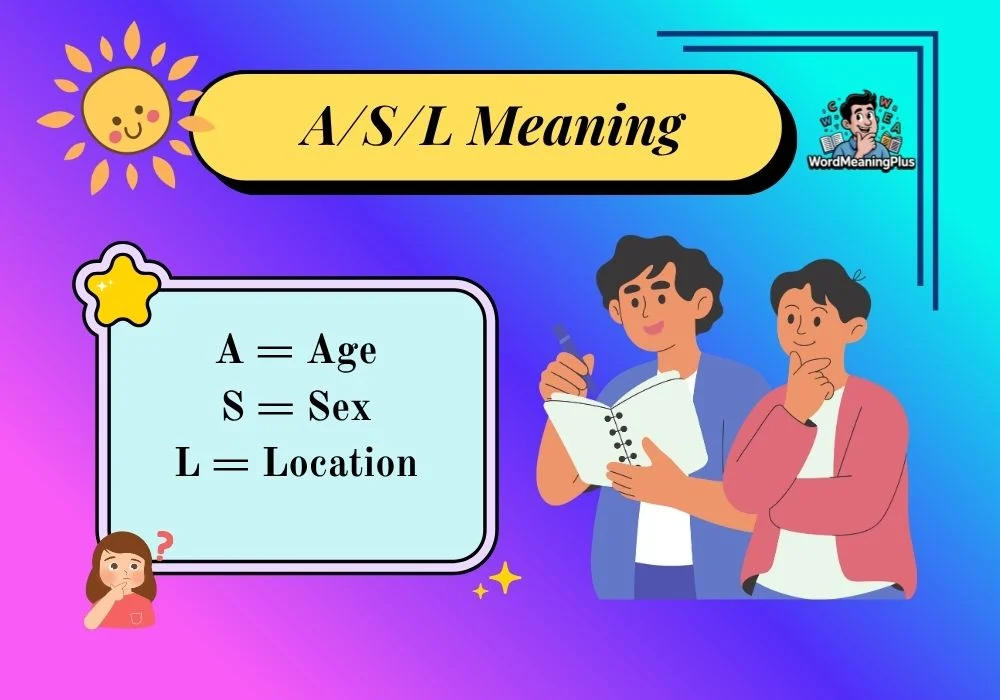
A/S/L stands for:
- A = Age
- S = Sex
- L = Location
So when someone types “a/s/l?”, they are asking:
“How old are you, what’s your gender, and where are you from?”
In simple terms, it’s a quick way to get basic personal info during an online conversation.
Where Did A/S/L Come From?
The origin of a/s/l goes back to the early internet days, especially the late 1990s and early 2000s.
It was most commonly used on:
- AOL Instant Messenger (AIM)
- Yahoo Chat Rooms
- IRC (Internet Relay Chat)
Back then, chat rooms were full of strangers. People wanted a fast way to know who they were talking to—so a/s/l became the go-to icebreaker.
Personal insight:
If you were online in the early 2000s, seeing “a/s/l?” was almost guaranteed within the first 30 seconds of a chat.
Is A/S/L Still Used in 2026?
Yes—but not as often as before, and usually in specific contexts.
Today, a/s/l meaning is more:
- Nostalgic
- Playful
- Occasionally ironic
It’s less common in mainstream apps like WhatsApp or Instagram DMs, but you may still see it on:
- Reddit threads
- Discord servers
- Anonymous chat apps
- Throwback meme posts
How to Use A/S/L in Texts or Chat
When Is It Appropriate to Use A/S/L?
You can use a/s/l when:
- Chatting in anonymous or semi-anonymous spaces
- Joining public chat rooms or forums
- Joking about old-school internet culture
Appropriate examples:
- Casual chats with strangers
- Retro-themed communities
- Meme conversations
Not recommended:
- Professional chats
- Workplace messaging
- Conversations with people you don’t want to share personal info with
How to Ask A/S/L Politely
Instead of bluntly typing “a/s/l?”, many users now prefer softer or clearer wording:
- “How old are you, if you don’t mind me asking?”
- “Where are you chatting from?”
- “Just curious—what’s your age range?”
This feels more respectful and 2026-friendly.
Examples of A/S/L in Real Conversations
Example 1: Classic Old-School Chat
User1: hey
User2: hi
User1: a/s/l?
User2: 21/f/nyc
Translation: 21 years old, female, New York City
### Example 2: Modern, Playful Use
User1: lol this feels like old AOL
User2: 😂 fr
User1: a/s/l? jk jk
Here, a/s/l is used as a joke, not a serious question.
### Example 3: Anonymous Chat App
User1: a/s/l?
User2: 25/m/tx — you?
Still common in anonymous environments where profiles don’t show details.
Common Mistakes or Misunderstandings About A/S/L
1. Thinking A/S/L Is Always Safe
Sharing age, gender, and location may seem harmless—but it can be risky.
Be cautious when:
- Talking to strangers
- Using anonymous platforms
- Sharing exact locations
Tip: It’s okay to be vague (e.g., “mid-20s, Europe”).
### 2. Assuming Everyone Knows What A/S/L Means
Younger users (Gen Z and Gen Alpha) may not recognize a/s/l at all.
They might:
- Ignore it
- Ask what it means
- Think it’s spam
### 3. Using It in the Wrong Context
Using a/s/l in:
- Work chats
- Professional forums
- Dating apps with full profiles
…can feel outdated or even creepy.
Why A/S/L Can Feel Awkward Today
Internet culture has changed.
In 2026:
- Profiles already show age/location
- Privacy awareness is higher
- Asking personal info too fast can feel intrusive
That’s why a/s/l meaning today is more about internet history than everyday use.
Related Slangs or Abbreviations You Should Know
If you’re learning a/s/l, these related terms often appear nearby:
- BRB – Be Right Back
- IDK – I Don’t Know
- ICYMI – In Case You Missed It
- DM – Direct Message
- AMA – Ask Me Anything
- IRL – In Real Life
👉 Internal linking suggestion:
You could link to articles like “BRB Meaning in Text” or “IRL Meaning Explained” for better SEO and user flow.
A/S/L vs Modern Alternatives
| Old School | Modern Version |
|---|---|
| a/s/l? | “Tell me about yourself” |
| 18/m/ca | “I’m 18 and live in California” |
| asl pls | Profile bio or intro post |
Modern chats value context and consent more than shortcuts.
Is A/S/L Considered Slang or Abbreviation?
It’s both.
- Abbreviation: Shortened form of three words
- Internet slang: Cultural usage tied to chat history
That’s why a/s/l meaning is still searched today—it’s part of internet language evolution.
Why Understanding A/S/L Still Matters
Even if you don’t use it, knowing the meaning helps you:
- Understand older chat logs
- Decode memes and jokes
- Avoid confusion in anonymous chats
- Stay informed about internet culture
Relatable moment:
Ever read a screenshot from 2005 and thought, “What does a/s/l mean?” Now you know.
Safety Tips When Someone Asks “A/S/L?”
Before replying, remember:
- You are not required to answer
- You can give partial or vague info
- Trust your instincts
Safe replies include:
- “I’d rather not share that”
- “I’m just here to chat”
- “Let’s talk about something else 😊”
Final Thoughts:
To sum it up, A/S/L means Age, Sex, Location—a classic internet abbreviation that once ruled chat rooms and still survives today in niche spaces.
While it’s no longer essential in modern messaging, understanding its meaning helps you navigate online conversations with confidence and awareness.
In 2025, a/s/l is less about gathering info and more about nostalgia, humor, and internet history. Use it wisely, understand it clearly, and always prioritize your privacy.

Michel Joy is a passionate writer and language enthusiast who loves exploring the meanings of words, modern slang, and internet abbreviations. As the author of WordMeaningPlus.com, Michel Joy’s goal is to help readers understand the true meaning of words, phrases, and texting slang in simple and easy English.
With a strong interest in language, communication, and online trends, Michel Joy writes informative articles that explain word meanings, chat abbreviations, and social media slang in a way that is clear, helpful, and easy to understand. The main mission of WordMeaningPlus.com is to make language learning simple for everyone, especially students, bloggers, and internet users who want quick and accurate meanings.