If you’ve ever seen someone say “You’re on my blacklist” or “That app is blacklisted” in a text or online chat and felt unsure about the exact meaning — you’re not alone. The word blacklist pops up everywhere today: texting, social media, gaming chats, forums, and even workplace messages.
Understanding the blacklist meaning in text is important because it often carries strong emotional or practical consequences. It can signal blocking, rejection, banning, or total exclusion. In digital conversations, missing this meaning can lead to confusion, awkward replies, or even conflict.
This guide explains what blacklist means in chat, how people actually use it in 2026, and how you can use it correctly without sounding rude or outdated.
What Does “Blacklist” Mean?
Simple Definition of Blacklist
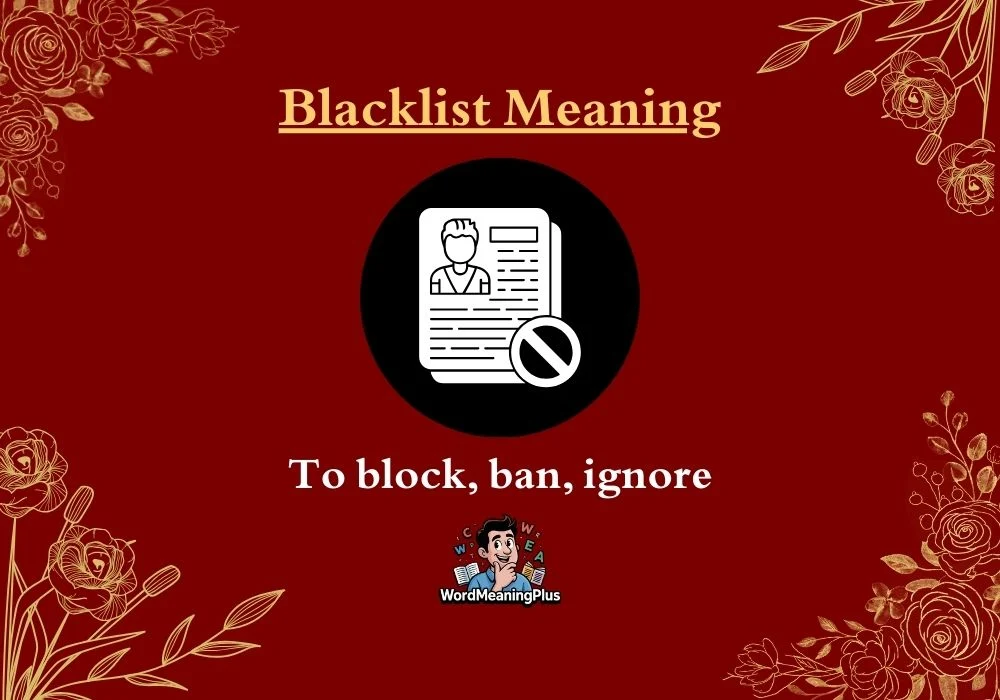
In texting and online communication, blacklist means:
To block, ban, ignore, or permanently exclude someone or something.
When someone says they’ve blacklisted a person, app, or number, it usually means:
- No more messages
- No access
- No chances left
Blacklist Meaning in Text
In chat language, blacklist meaning often refers to:
- Blocking someone on social media
- Muting or banning a user in a group or game
- Ignoring messages permanently
- Cutting someone off emotionally or digitally
Example:
“He lied again, so he’s officially blacklisted.”
This means the person is done — no replies, no forgiveness.
Origin of the Word “Blacklist”
The term blacklist has been around for centuries and originally referred to:
- Lists of people who were not trusted
- Names marked for punishment or exclusion
In modern digital culture, the meaning has shifted slightly:
- From physical lists → digital blocking
- From official bans → personal boundaries
Despite its long history, the term is still widely used in casual chat in 2026.
How to Use “Blacklist” in Texts or Chat
Common Contexts Where “Blacklist” Is Used
People use blacklist in many digital spaces, including:
- Text messages
- WhatsApp & Telegram
- Instagram & Snapchat
- Discord & gaming chats
- Online forums
- Workplace chats (Slack, Teams)
How “Blacklist” Is Used in Casual Texting
In casual conversation, blacklist often sounds dramatic or final.
Examples:
- “If he cancels again, he’s blacklisted.”
- “Spam callers go straight to my blacklist.”
- “That restaurant is blacklisted for life.”
In these cases, blacklist is used emotionally — not technically.
Professional or Tech-Based Usage
In professional or tech chats, blacklist has a more literal meaning:
- Blocking email addresses
- Restricting IPs
- Banning users from platforms
Example:
“That domain is blacklisted for phishing.”
Here, the meaning is factual, not emotional.
Examples of “Blacklist” in Conversations
Real-Life Text Examples
Friend to friend
“She ghosted me twice. Blacklisted.”
Gaming chat
“Toxic players get blacklisted fast.”
Work message
“This vendor is blacklisted due to past issues.”
Social media DM
“One more rude message and you’re blacklisted.”
Funny or Relatable Examples
People often use blacklist jokingly:
- “Anyone who spoils the show is blacklisted.”
- “Pineapple pizza lovers are on my blacklist 😂”
- “Alarm clocks are permanently blacklisted.”
This softer usage adds humor while keeping the meaning clear.
Common Mistakes or Misunderstandings
Mistake 1: Thinking It Means Temporary Blocking
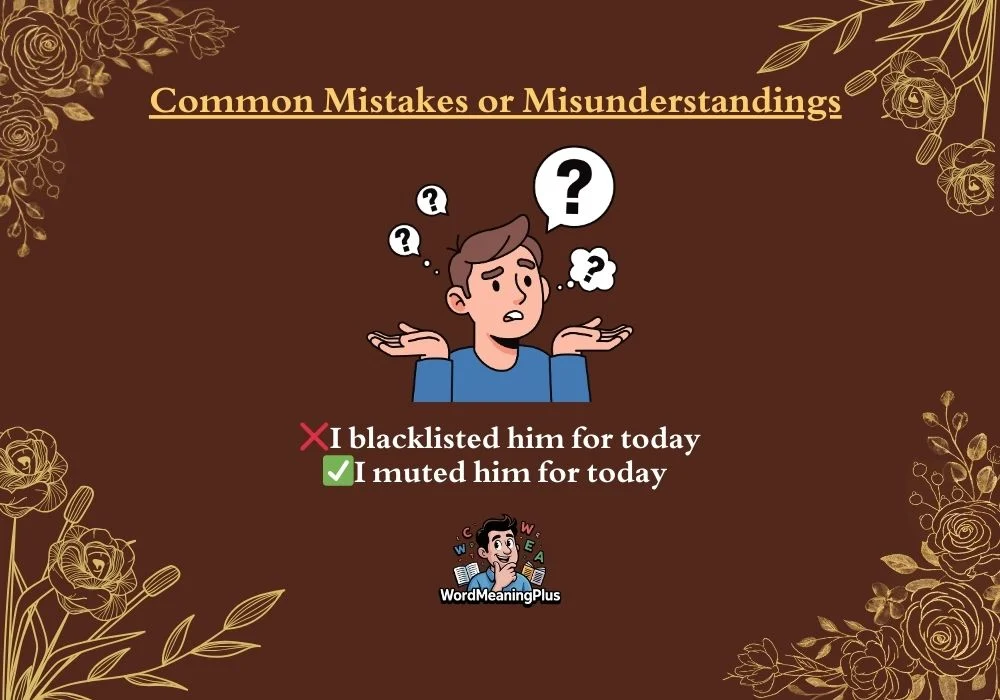
Many people confuse blacklist with a short-term mute.
❌ Wrong:
“I blacklisted him for today.”
✅ Better:
“I muted him for today.”
Blacklist usually implies permanence.
Mistake 2: Using It Too Harshly
In emotional conversations, blacklist can sound extreme.
Instead of:
- “You’re blacklisted.”
You might say:
- “I need space right now.”
Tone matters, especially in texting where context is limited.
Mistake 3: Confusing Blacklist with Ignore
| Term | Meaning |
|---|---|
| Ignore | Temporary or passive |
| Mute | Silent but reversible |
| Block | Strong action |
| Blacklist | Final or long-term |
Understanding this difference avoids miscommunication.
Related Slangs or Abbreviations
Here are common slang terms related to blacklist meaning in text:
1. Blocked
- Direct and modern
- More commonly used than blacklist
Example:
“He’s blocked everywhere.”
2. Ghosted
- Suddenly ignoring without explanation
Example:
“She ghosted me after that.”
3. Muted
- Messages still arrive but silently
Example:
“Group chat is muted.”
4. Banned
- Often used in gaming or forums
Example:
“He got banned for cheating.”
5. Cut Off
- Emotional version of blacklist
Example:
“I had to cut him off.”
When Should You Use “Blacklist” in Chat?
Appropriate Situations
Use blacklist when:
- You want to sound firm
- The decision is final
- You’re speaking casually or humorously
- You’re discussing tech or moderation
Situations to Avoid
Avoid using blacklist when:
- You want to keep peace
- The situation is temporary
- You’re talking to sensitive audiences
In professional settings, consider alternatives like:
- Restricted
- Removed
- Disabled
Is “Blacklist” Still Relevant in 2026?
Yes — but usage is evolving.
Trend Insights (2026)
- Still popular in casual texting
- Common in gaming & tech
- Sometimes replaced with softer terms
- Used humorously more than seriously
Despite debates around language sensitivity, blacklist meaning in chat remains widely understood and used.
SEO Tip: Variations People Search For
To help readers and content creators, here are common keyword variations:
- blacklist meaning in text
- what does blacklist mean
- blacklist slang meaning
- blacklist meaning chat
- what does blacklisted mean in texting
Using these naturally improves readability and search performance.
Internal Linking Suggestions (Optional)
For better SEO, consider linking to:
- “Blocked vs Muted Meaning in Text”
- “Ghosted Meaning in Chat”
- “Common Internet Slang in 2026”
These help readers explore related slang concepts.
Conclusion: Blacklist Meaning Explained Simply
To sum it up, blacklist meaning in text refers to blocking, banning, or permanently excluding someone or something from communication. Whether used seriously, emotionally, or jokingly, the word signals a strong boundary in modern digital culture.
In 2026, people still use blacklist across texts, chats, games, and social media — but often with humor or exaggeration. Knowing the tone and context helps you use it correctly and avoid misunderstandings.

Anderson is a passionate writer and language enthusiast who loves exploring the meanings of words, modern slang, and internet abbreviations. As the author of WordMeaningPlus.com, Anderson’s goal is to help readers understand the true meaning of words, phrases, and texting slang in simple and easy English.
With a strong interest in language, communication, and online trends, Anderson writes informative articles that explain word meanings, chat abbreviations, and social media slang in a way that is clear, helpful, and easy to understand. The main mission of WordMeaningPlus.com is to make language learning simple for everyone, especially students, bloggers, and internet users who want quick and accurate meanings.